

About Sarajevo and what makes it special
Sarajevo, the capital of Bosnia & Herzegovina is a city with a rich, deep, complex, and turbulent history. Sarajevo was founded by the Ottoman Empire in 1461 when the Ottomans conquered the Balkan region. It was under the Ottoman rule for 4 centuries. In 1878, the city of Sarajevo, along with the rest of the Bosnia Vilayet (the Ottoman Empire’s westernmost administrative division), was occupied and ruled by the Austro-Hungarian empire. In 1914, the First World War started because of the assassination of the heir of the Austro-Hungarian empire in Sarajevo. After the First World War, Sarajevo became part of the Kingdom of Yugoslavia. Following the Second World War, Sarajevo was the capital of the Republic of Bosnia within the Socialist Federal Republic of Yugoslavia. In 1984, Sarajeive hosted the Winter Olympic Games which is widely regarded as among the most successful Winter Olympic Games in history.
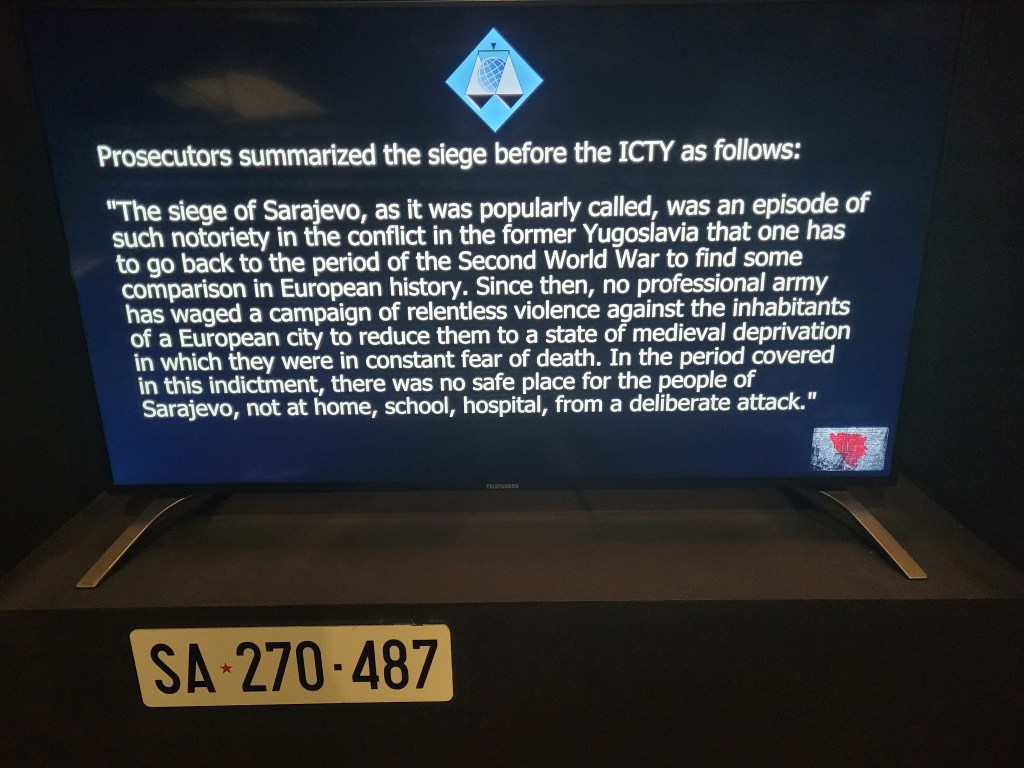
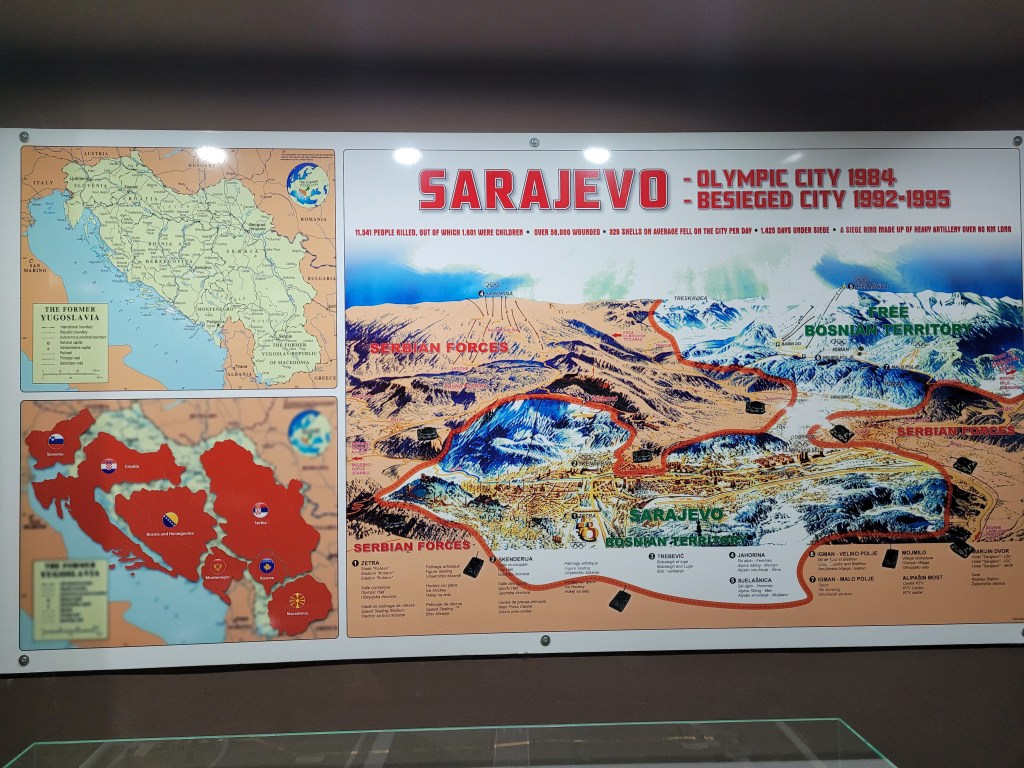
The history of modern Sarajevo begins with the declaration of independence of Bosnia and Herzegovina from Yugoslavia in 1991. The following three years found Sarajevo as the center of the longest siege in the history of modern warfare. The city was held without electricity, heating, water, or medical supplies for more than three years. During this time, the surrounding Bosnian Serb forces shelled the city, an average of 329 shell impacts occurred per day, with a high of 3,777 shell impacts on 22 July 1993. It is estimated that 12,000 people were killed and another 50,000 wounded during the siege. However, the Bosnian Serb army was unable to decisively capture the city. Following the Dayton Accords and a period of stabilization, the Bosnian government declared the siege officially over on 29 February 1996 after about 4 years.
In February 2024, I visited Bosnia & Herzegovina for the first time. In this blog post, I will take you through my travel experience in Sarajevo, the capital of Bosnia & Herzegovina. I will also share my thoughts and emotions about this beautiful city so join me!
The Flight
After living in Canada for about 10 years (on and off), I finally decided to leave North America and relocate to the Middle East region. Right now, I work and live in Kuwait. So, the first thing I did upon learning about a 4-day public holiday was to buy a flight ticket to a new destination. Bosnia & Herzegovina had been on my travel list for a long time, and I was incredibly excited to see this country for the very first time.
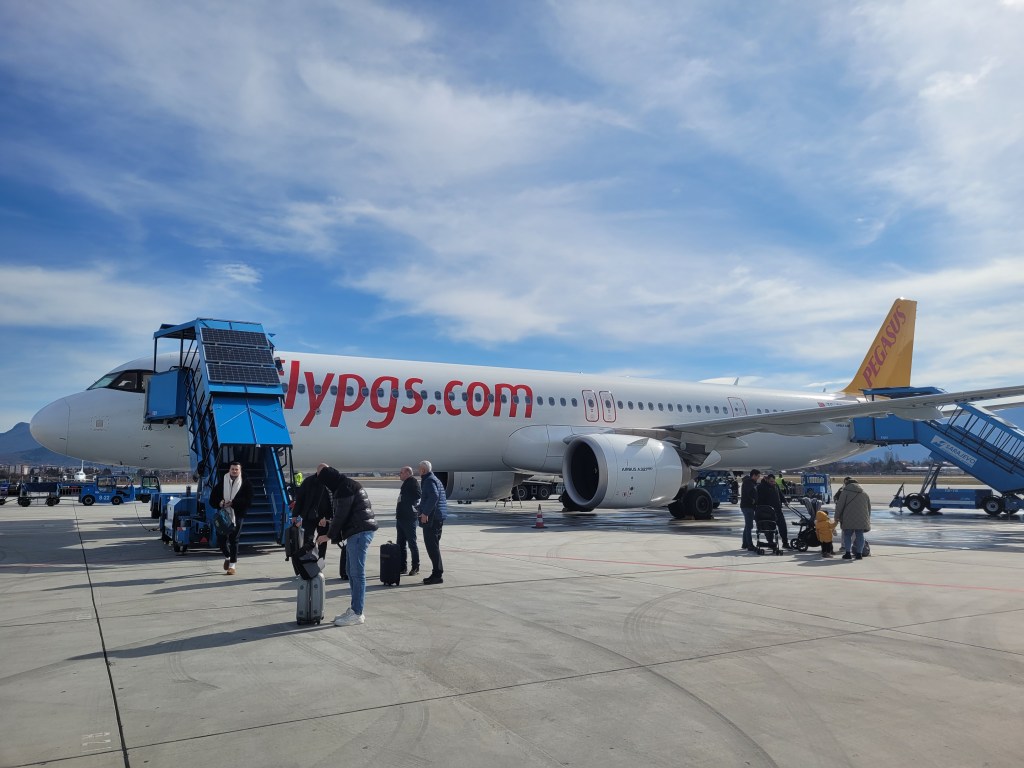
I flew with Pegasus Airlines, a Turkish low-cost carrier. I must say that I had low expectations before the flight, especially since it’s a budget airline so the only thing I was hoping for was to arrive safely on time. Now after this experience with them, I would confidently say that they’re really good and I would consider them for future trips. The return ticket to Sarajevo cost me around 250 USD which is a good deal in a high season considering that there was a public holiday. The first leg of my journey from Kuwait City to Istanbul Sabiha Airport was uneventful. With a 6-hour layover in Istanbul, I had plenty of time to kill. I visited Kepler Club in the international transit hall and managed to book 3 hours in a sleeping pod. Fortunately, this service didn’t cost me anything, as I used my Travel Pass from my Mastercard credit card. This particular credit card grants me unlimited lounge access in many airports around the world, unlike my Canadian Visa Infinite card, which only provides a limited number of lounge visits per year (only 6). I was able to get some much-needed rest in a quiet, comfortable, and clean sleeping pod. I highly recommend trying it if you ever find yourself having a long layover at Sabiha Airport in Istanbul. You can find more information on their website here: Kepler
The flight from Istanbul to Sarajevo was relatively short. I decided to pay a bit extra for an emergency seat, and I believe it was worth it considering the great legroom it provided. I noticed that the cabin crew members were highly professional, prioritizing safety precautions as they strictly enforced regulations, prohibiting me from storing any item under the seat in front of me and requesting that I store it in the overhead cabin.
I decided to order a meal during the flight. While I had hoped for Turkish meatballs (Kofte), unfortunately, they had run out of them. Instead, I got chicken schnitzel, which I must say it was quite good. The meal cost approximately 15 USD. We landed and I proceeded to the passport control window, where I experienced the quickest passport control processing ever, I was through in less than thirty seconds! I truly love my Canadian passport and am so grateful to have it.


Arriving in Sarajevo
I picked up my suitcase and found an ATM to withdraw some cash. Many places in Bosnia don’t accept credit cards so you need to carry cash with you all the time, which isn’t my preferred mode of payment as I find it more convenient to travel cashless using my credit cards. I hailed a taxi to take me to my Airbnb apartment in the city center. Although there is a bus service from the airport to the center, I opted for the taxi to reach the apartment quickly and begin exploring Sarajevo as I didn’t want to waste any time. The taxi driver requested around 20 USD for the 18-minute ride to the center. I felt I may have been slightly ripped off, but I chose not to negotiate to avoid any hassle.
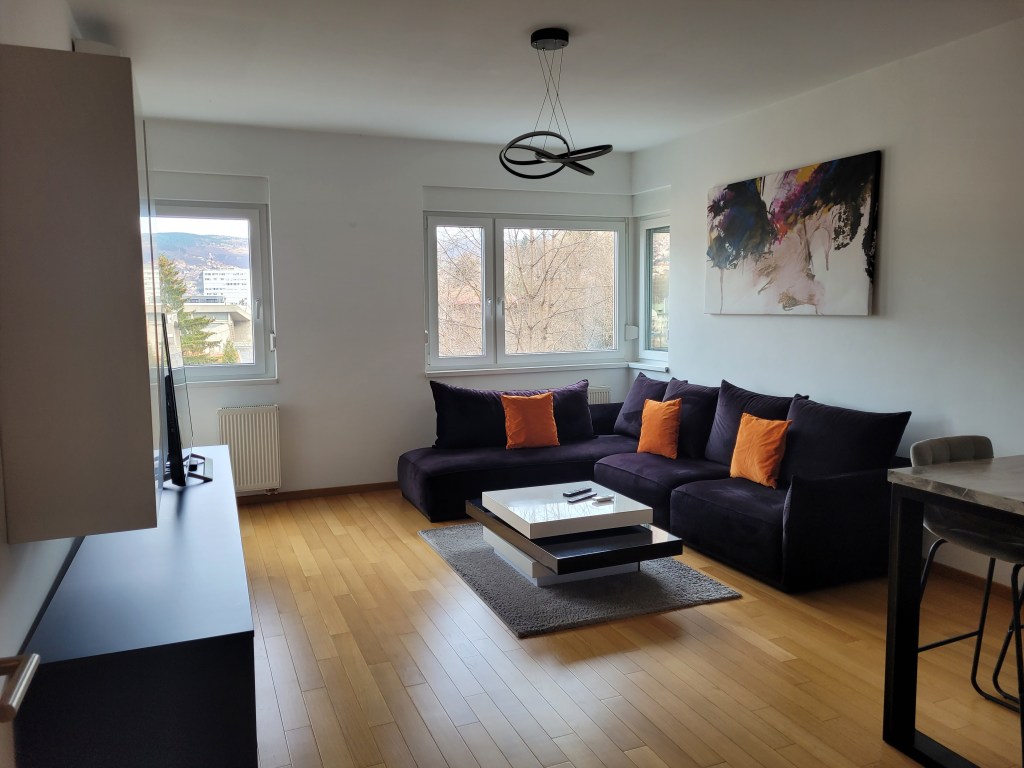
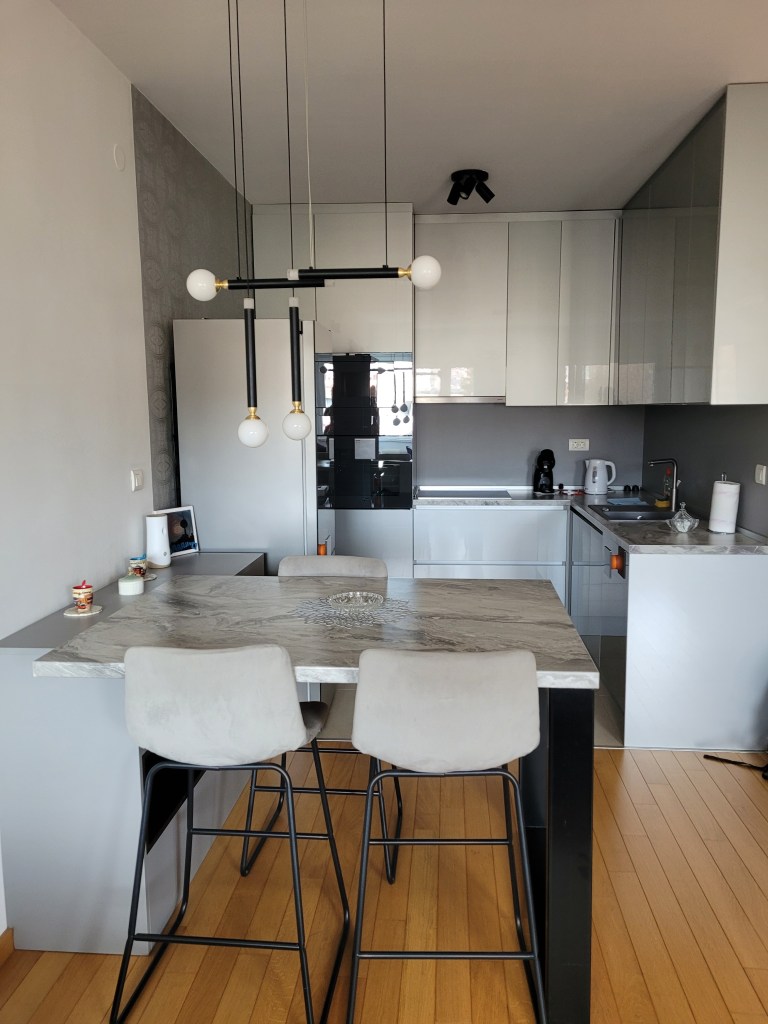
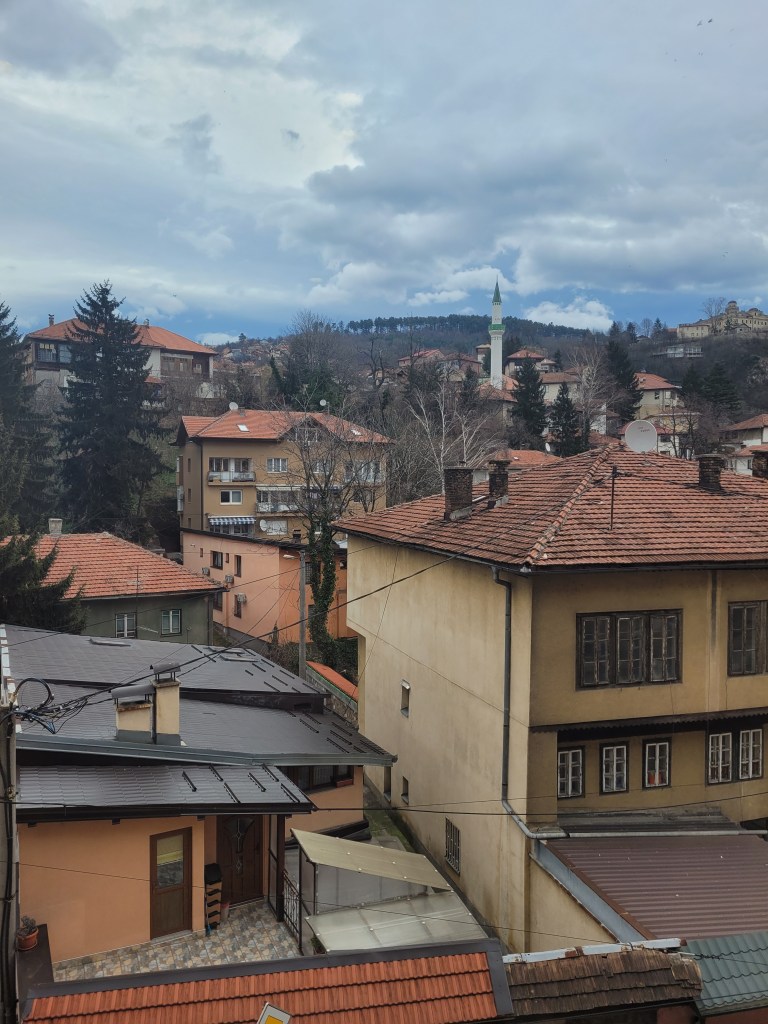
The mother of the Airbnb owner awaited me outside the apartment. She didn’t speak any English but my basic knowledge of Russian, coupled with the similarity between Russian and Bosnian since they’re both Slavic languages, it was possible to communicate. After checking in, I was delighted to call this charming apartment home for the next four days. By the way, the cost for the duration of my stay (4 nights) was only USD 166! Isn’t that an incredible deal? I particularly loved the stunning view from the apartment.

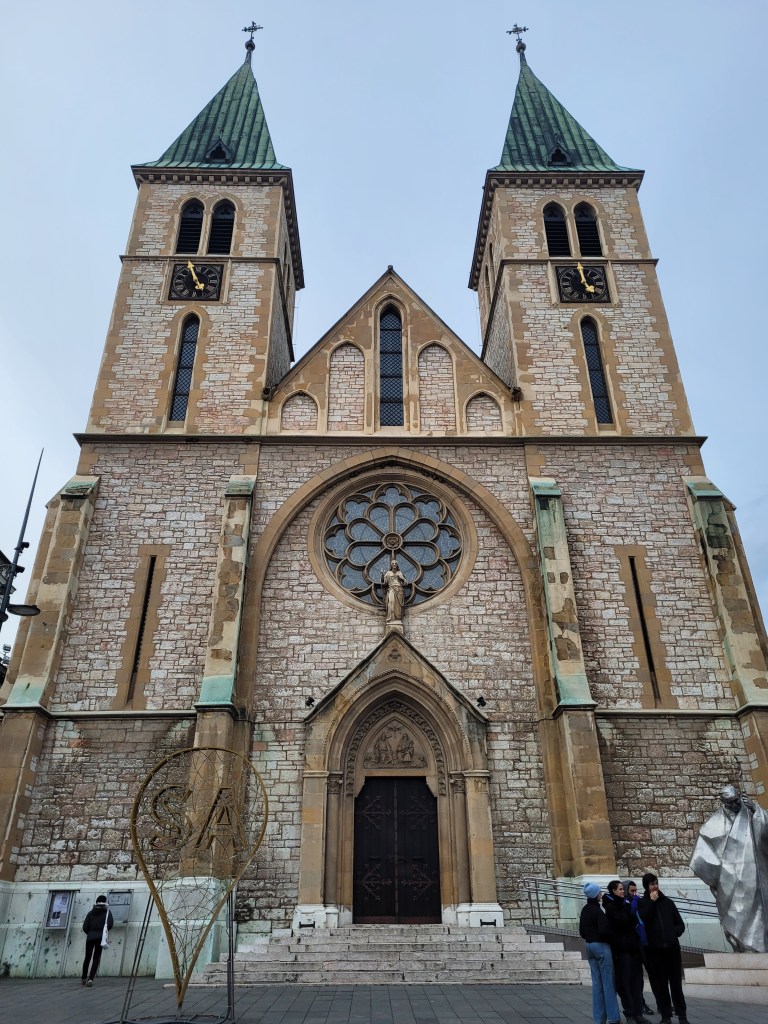
After freshening up and changing, I walked to the old city, known as Baščaršija. It was just a 20-minute walk from my Airbnb apartment. As I strolled along the river, I was interested in the sights of the buildings and the scenery around me. The first notable building I noticed was the Academy of Fine Arts Sarajevo, a beautiful structure constructed in 1899 during the Austro-Hungarian rule of Bosnia and Herzegovina. A short distance away stood the Sacred Heart Cathedral, a beautiful Catholic church, also built during the Austro-Hungarian era.
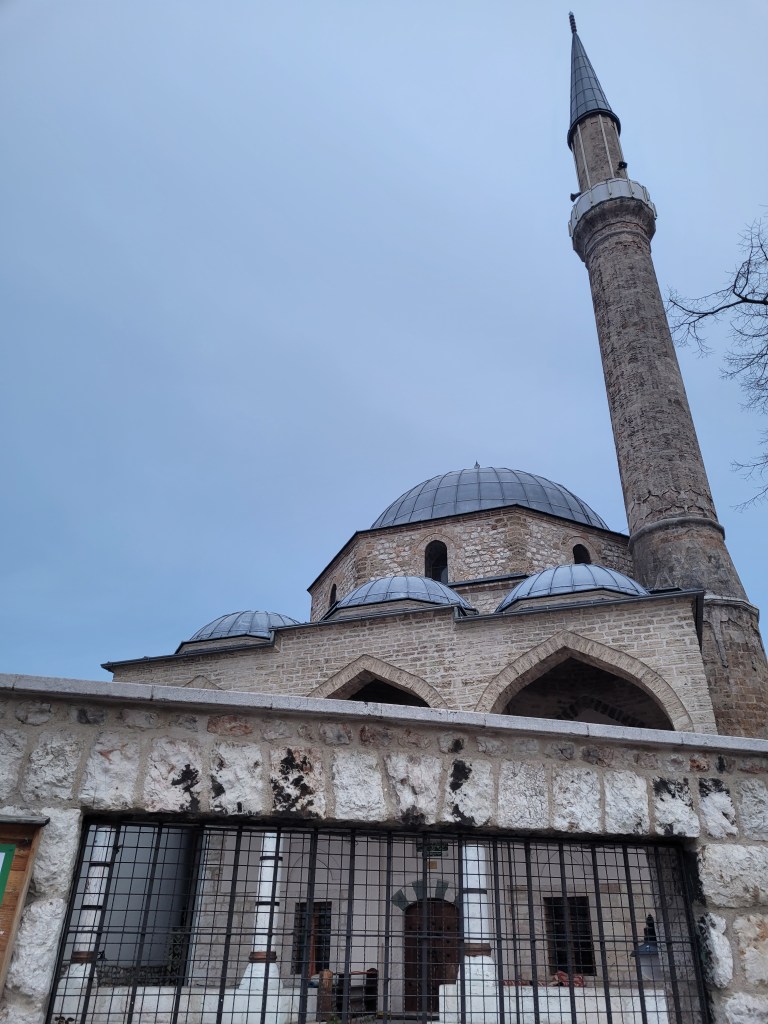
Upon reaching the Sarajevo meeting of cultures point, I observed the contrast between the left-hand side, representing the Austro-Hungarian era, and the right-hand side, belonging to the Ottoman era. Beyond this point, I encountered more mosques, oriental shops, restaurants, and coffee houses, marking the transition into a truly magical architectural landscape. Notable landmarks included the magnificent Gazi Husrev-beg Mosque, dating back to the 16th century, and the Bascarsija Mosque, also constructed by the Ottomans in the same period.
I was starving so I was looking for a Ćevapi restaurant. Despite several attempts, all the Ćevapi places were busy with hungry eaters, and I struggled to find a vacant seat. Eventually, I found an empty spot, although I can no longer recall the name of the restaurant. Unfortunately, the Ćevapi I tried there didn’t meet my expectations, leaving me disappointed. I’ll delve further into the culinary experiences of Sarajevo in the food section of this blog.
Following the heavy meal, it was time to relax with a cup of Bosnian coffee. I found a bustling café named Divan. However, the café was heavy with cigarette smoke. One notable thing in Sarajevo that I found surprising was the tolerance for indoor smoking. It seemed to be a common practice throughout the Balkans as I experienced the same thing in Serbia. I still enjoyed my coffee though, despite the heavy smoke around me. I even became addicted to Bosnian coffee, I was drinking it multiple times a day in the following days.
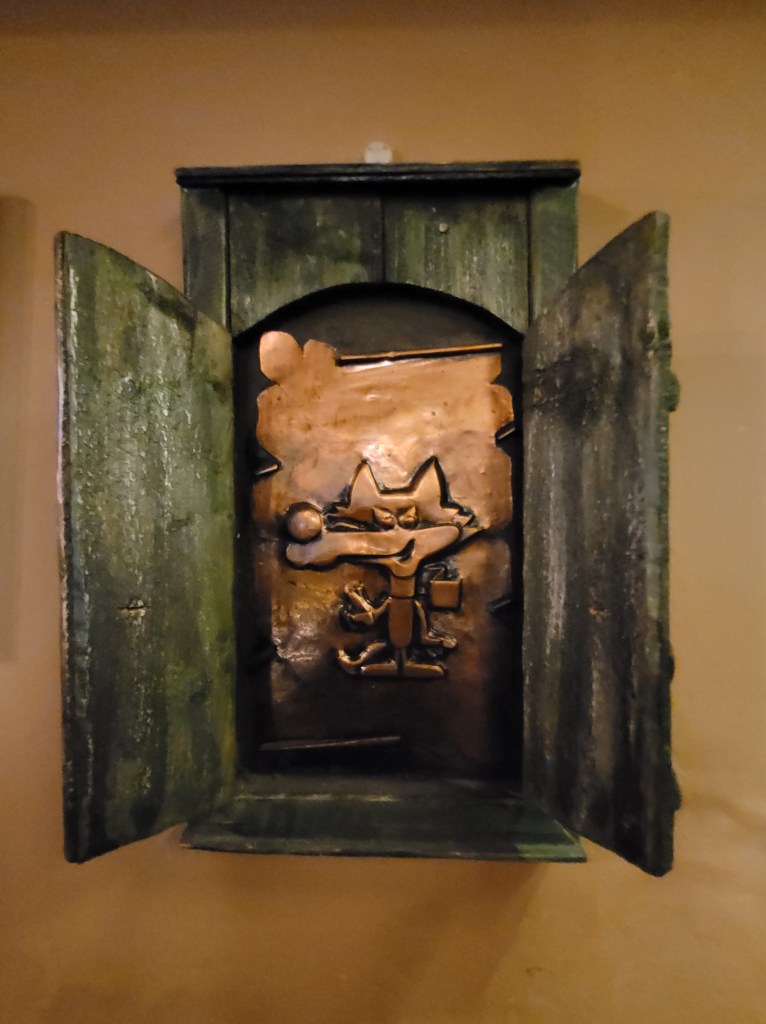
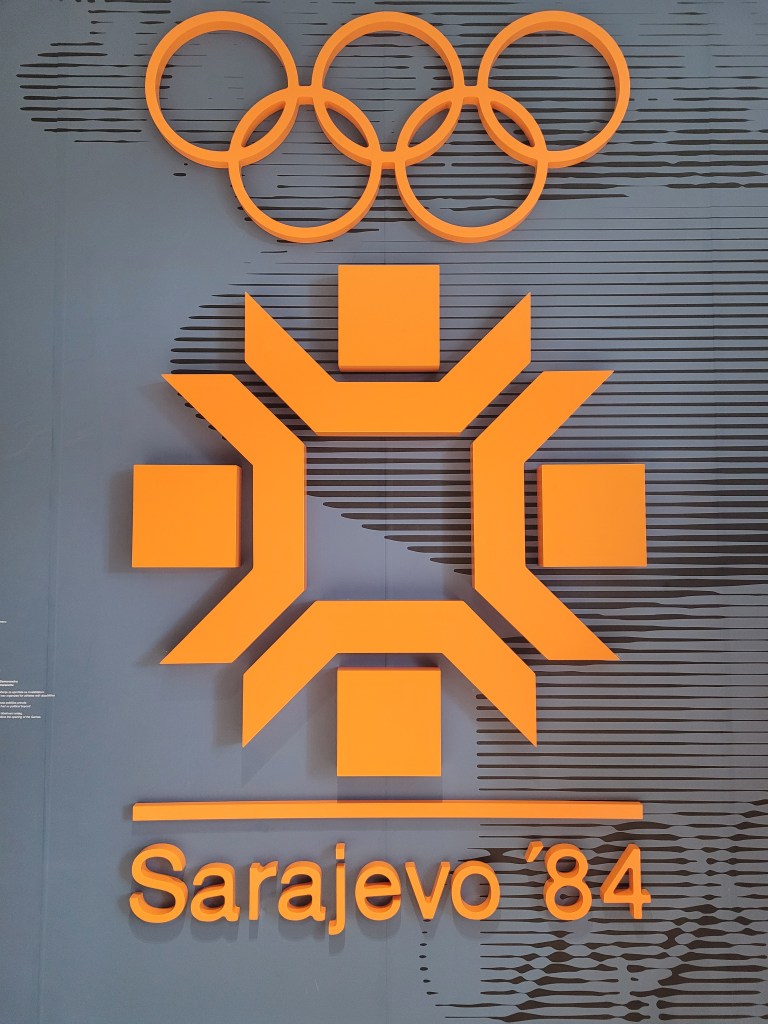
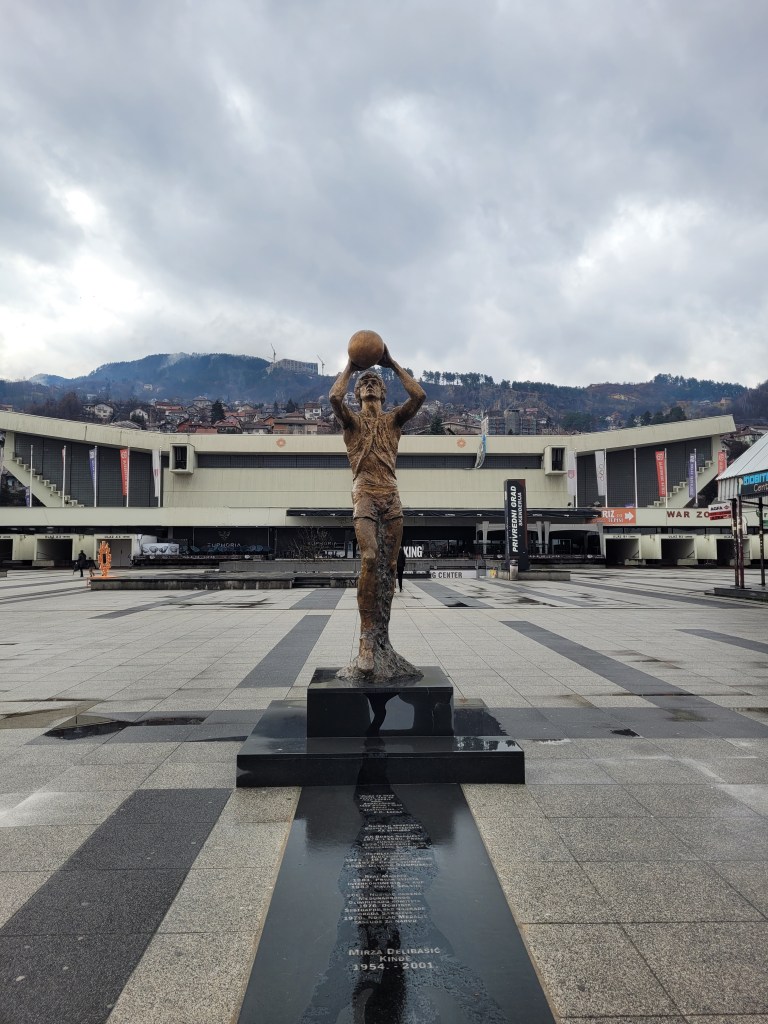
While walking in the city, I noticed the mascot and the logo of the 1984 Winter Olympic Games, which was hosted by Sarajevo, displayed everywhere. I encountered the mascot in approximately 7 or 8 different locations. Apparently, Sarajevo was celebrating the 40th anniversary of hosting the Winter Olympic Games, which were regarded as one of the best and most recognized Winter Olympics ever. I even found a Gastro Pub named Vučko, after the Olympic mascot. It was an incredible place full with nostalgic photos of Sarajevo during its time as the center of the world when it hosted the games back in 1984.
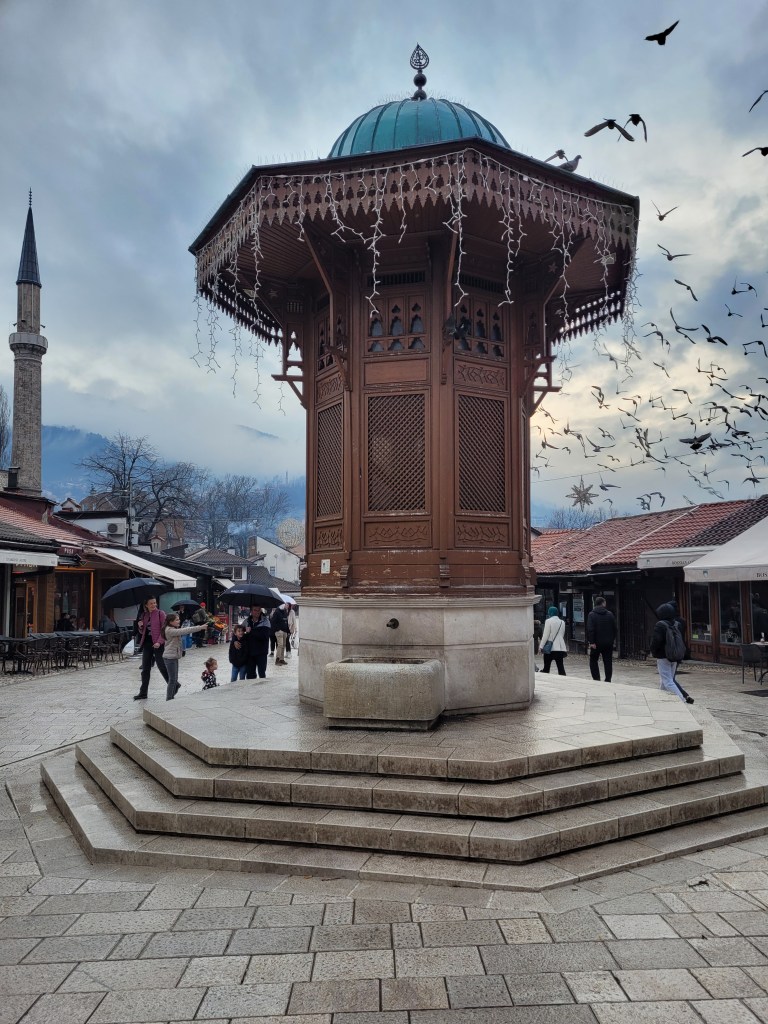
Anothe beautiful landmark of the city was the fountain in the center of Baščaršija square. The fountain, know as Sebilj is an Ottoman-style wooden fountain built in 1753. The legend say, if you drink from the fountain, you will have to come back to Sarajevo.





Olympic History
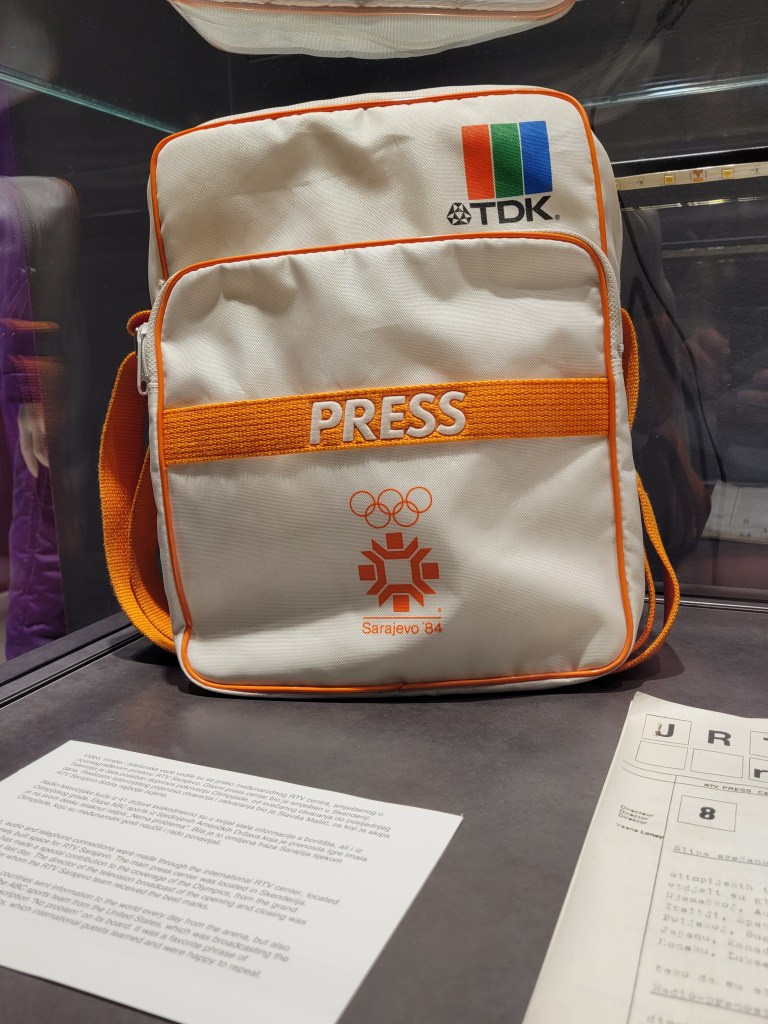
After a great first day, I had a packed schedule for the following day, as I wanted to explore numerous sites and museums within a limited timeframe. I started my day with a tasty breakfast that consisted of different types of Burek (which I’ll delve into in detail in the food section below) and Bosnian coffee. My first destination was the Olympic Museum in Sarajevo. Arriving around 10 am, I found the museum had just opened for the day. To my surprise, the woman at the entrance was in a great mood so she told me, “You know what? I am going to admit you for free.” I was so thankful of course but I had to ask why so? She replied with a smile, “Because I’ve just had a coffee,” indicating her cheerful mood. Inside, I spent approximately half an hour admiring the museum’s collection of nostalgic items, reflecting on a time when Sarajevo was the center of the world. The museum is located inside an impressive building constructed in 1903. It was a delightful and nostalgic experience and the mascot -Vučko- was displayed everywhere in the museum. This mascot became the highlight of this trip.





Genocide and The Siege of Sarajevo Museums
After a delightful experience at the Olympic Museum, it was time for me to learn more about Bosnia’s difficult history, particularly the Bosnian War of the 1990s. As a child during the outbreak of the Balkan war around 1992, I remember hearing about it and witnessing the horrific scenes on the news. However, being present in Bosnia and having firsthand information about those who struggled with these atrocities is an entirely different experience.
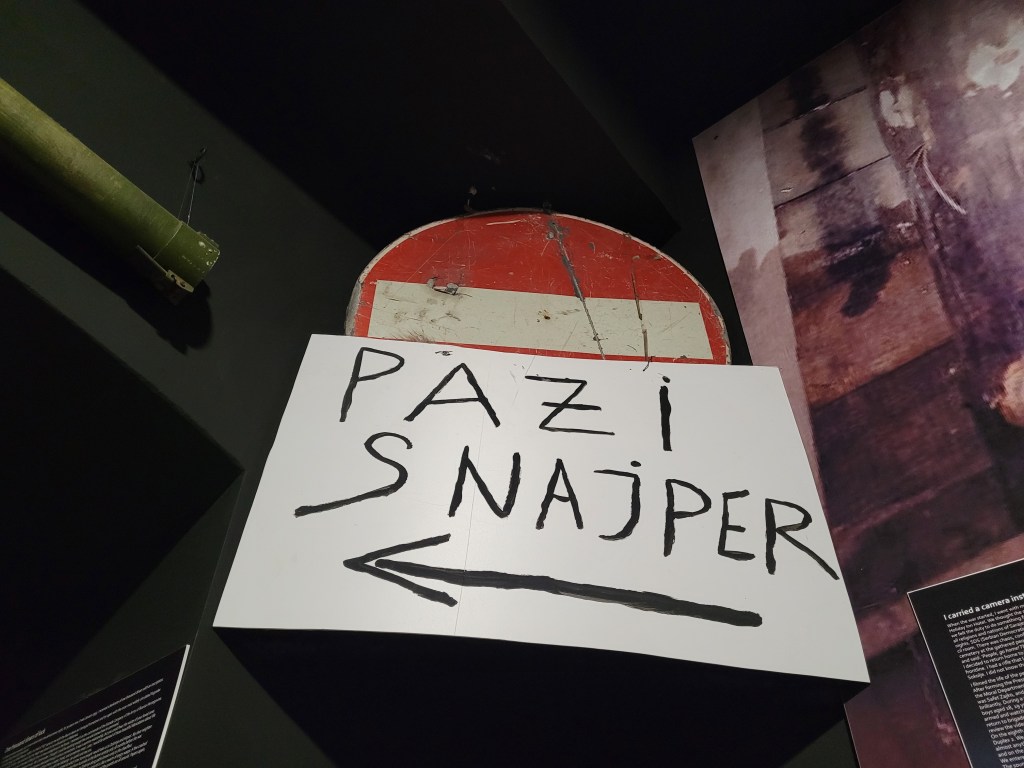
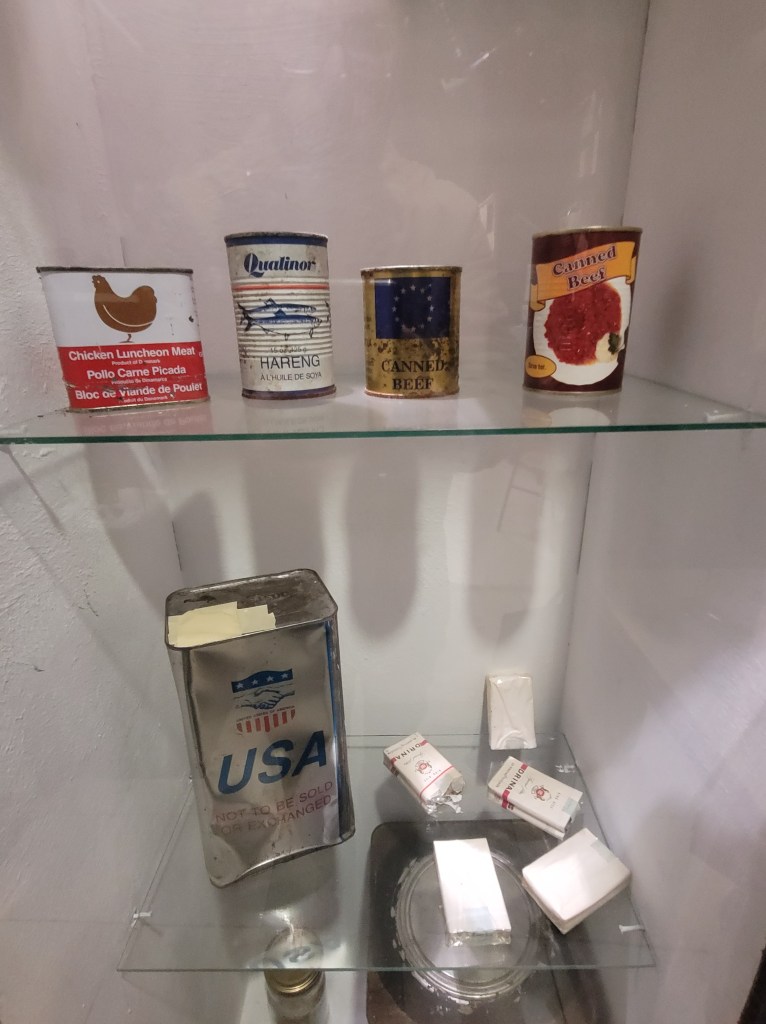
My next stop was the Siege of Sarajevo museum, a small museum but with many powerful messages. Reading the narratives of individuals who endured the siege of this once beautiful European city was painful but necessary. As mentioned earlier, the Siege of Sarajevo stands as the longest in modern warfare history. Despite the unimaginable circumstances, people still found some moments of joy, such as following the 1994 FIFA World Cup in the USA. It’s a testament to the human spirit’s resilience and the drive to survive, even in such difficult times. On the unpleasant side, the information I read about snipers surrounding the city from all the hills is truly terrifying. It’s so hard to understand that these ultra-nationalist Bosnian Serbs who committed all these atrocities to the Bosniaks once lived side by side with their victims; they were their colleagues, classmates, and even relatives! I had a conversation with the lady who works there after my visit, and I must say, it was not an easy conversation. I felt that I was carrying a very heavy heart after what I had seen.
Right after I visited the Sarajevo siege museum, I visited the museum of crimes against humanity and genocide. It was another difficult place to visit. It was incredibly devastating to learn about what the Bosnians went through and how they suffered because of some groups of ultra-nationalist fanatics who just wanted to wipe them off the face of the earth. It was so sad to learn more about what happened in Srebrenica and how the UN forces didn’t do much to stop that genocidal barbaric act. It was a difficult experience and while seeing that, I was connecting this with what is happening right now in Gaza, and that felt even more devastating. I felt sad and angry, so angry that right now we’re witnessing a genocide right in front of us and we’re unable to stop it. There was a section in the museum where people could write their wishes about peace and against the war in sticky notes and hang it there. There were thousands of them and of course, I wrote mine.







Austro-Hungarian Era
Bosnia and Herzegovina came under the Austro-Hungarian rule from 1878 to 1918. During this 40-year period, Sarajevo and the region experienced significant transformations. Infrastructure was modernized, new governance structures were introduced, and the economy flourished. Sarajevo witnessed the construction of numerous important buildings and institutions, shaping its architectural identity. However, the rule also provoked tensions and resistance, particularly among Bosnian nationalists. The assassination of the Austro-Hungarian heir to the throne and the subsequent outbreak of World War I marked the peak of these tensions.
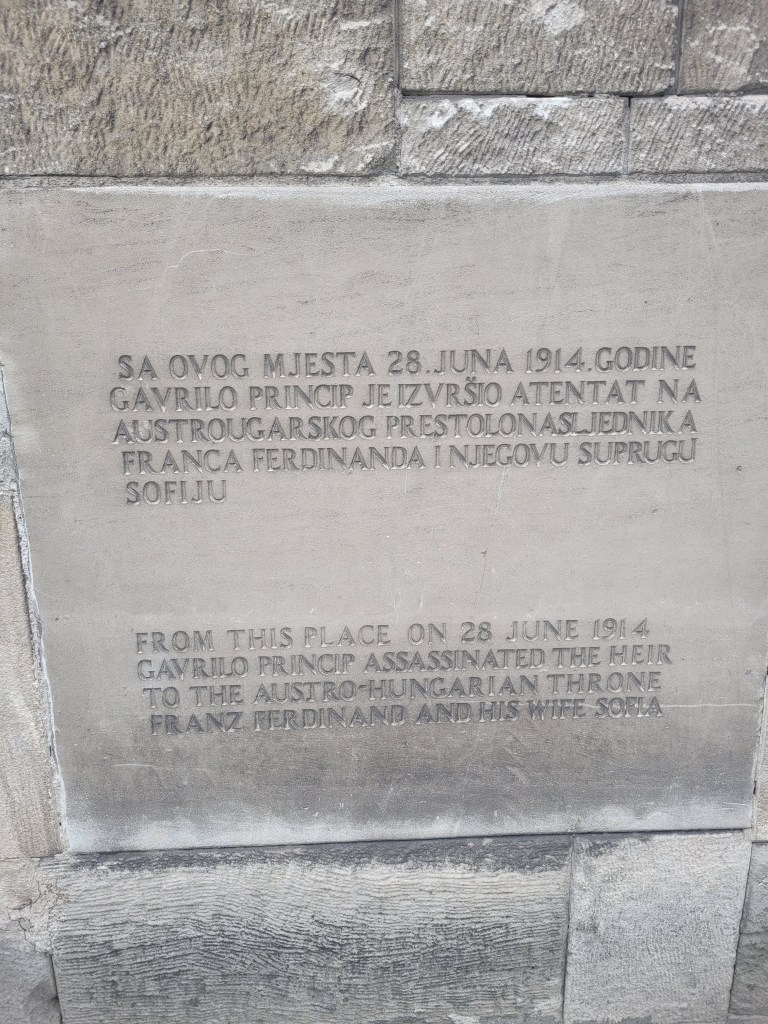
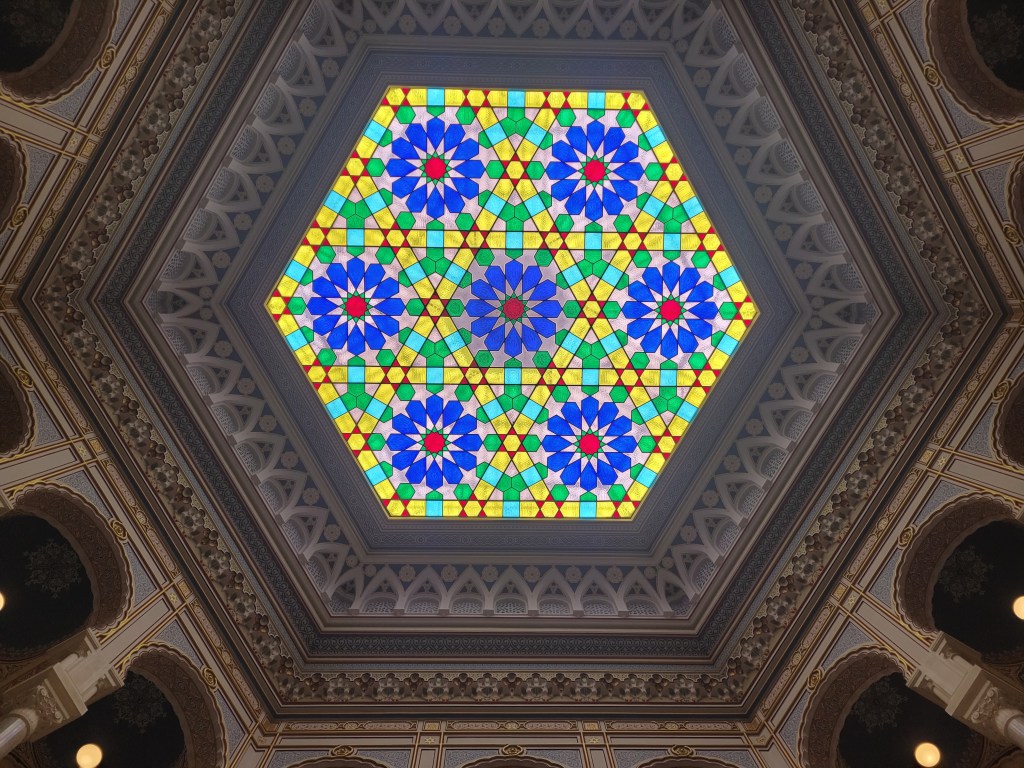
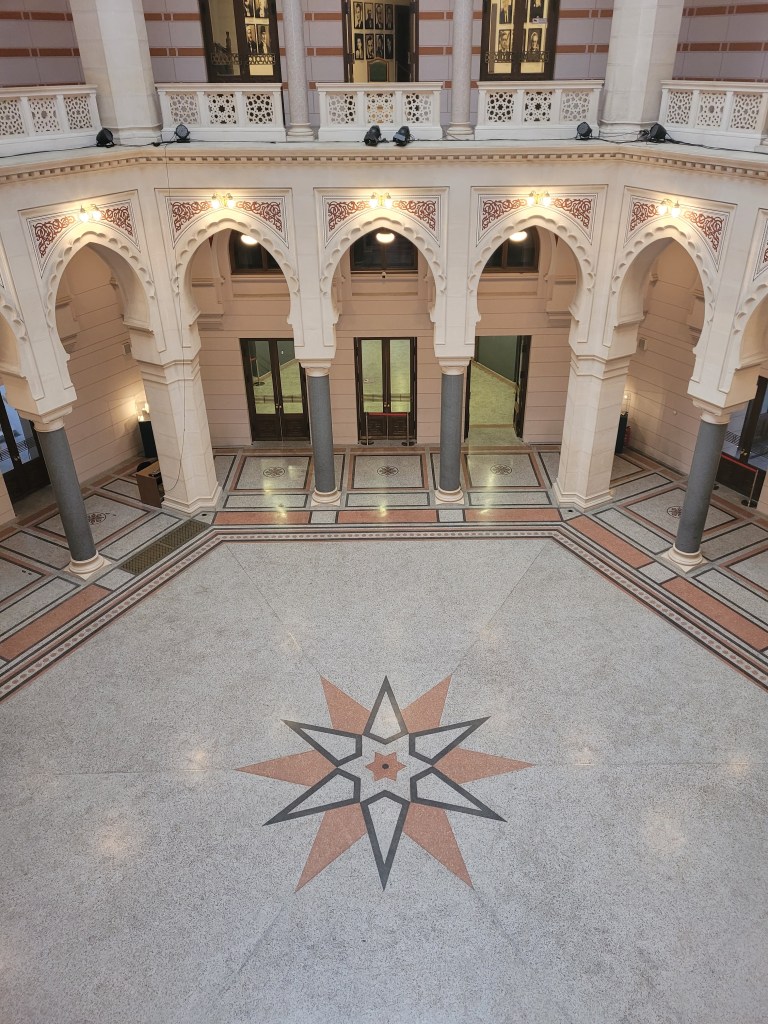
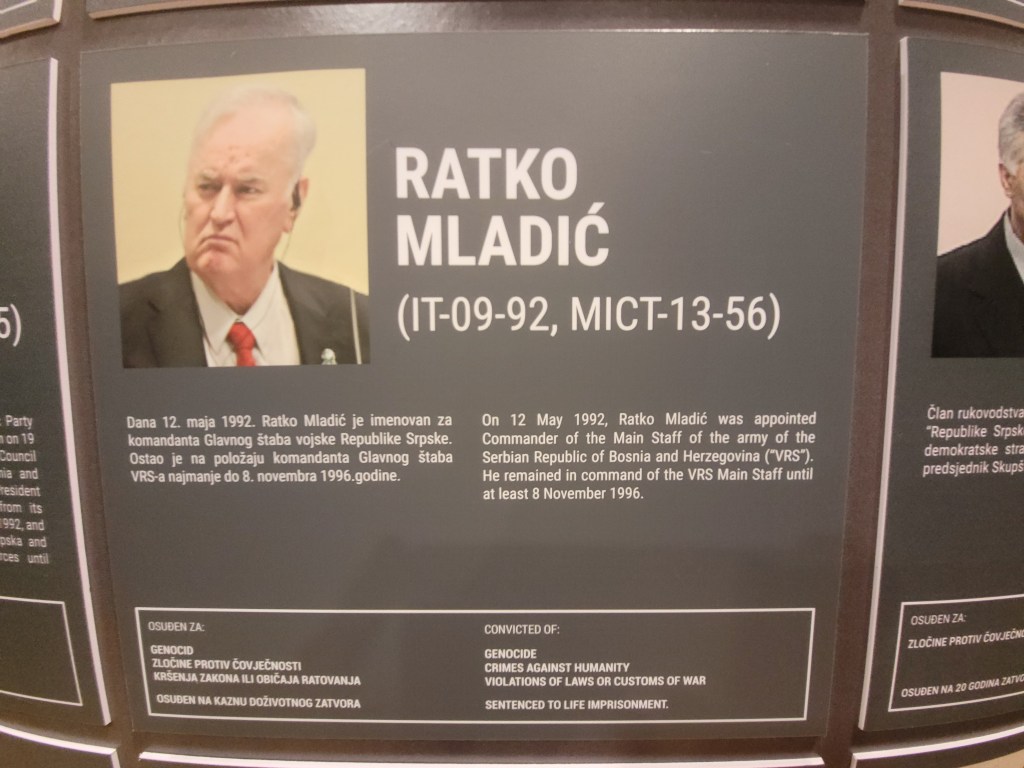
I walked on the Latin Bridge where Archduke Franz Ferdinand, the Austro-Hungarian heir to the throne, was assassinated by Gavrilo Princip, a Bosnian Serb nationalist. Later, I visited one of the most stunning buildings I’ve seen in Sarajevo: Sarajevo City Hall, built in 1896 during the Austro-Hungarian rule. The building is elegant from the outside and fascinatingly beautiful on the inside. I read somewhere that the building is a monument to the multiculturalism of Bosnia; the pseudo-Moorish design honours the Islamic background of this Austro-Hungarian territory, with the facade based on Mamluk-period buildings in Cairo. The interior of the building is filled with magnificent artistic pieces. I seriously didn’t expect it to be that beautiful. I spent over an hour there, admiring the beauty of the building and moving from one room to another, reading about the history of the building and Sarajevo, including some information about the city’s modern turbulent history and the war criminals convicted by the International Court of Justice. It’s certainly one of the landmarks of the city. I enjoyed every minute there.



The Food
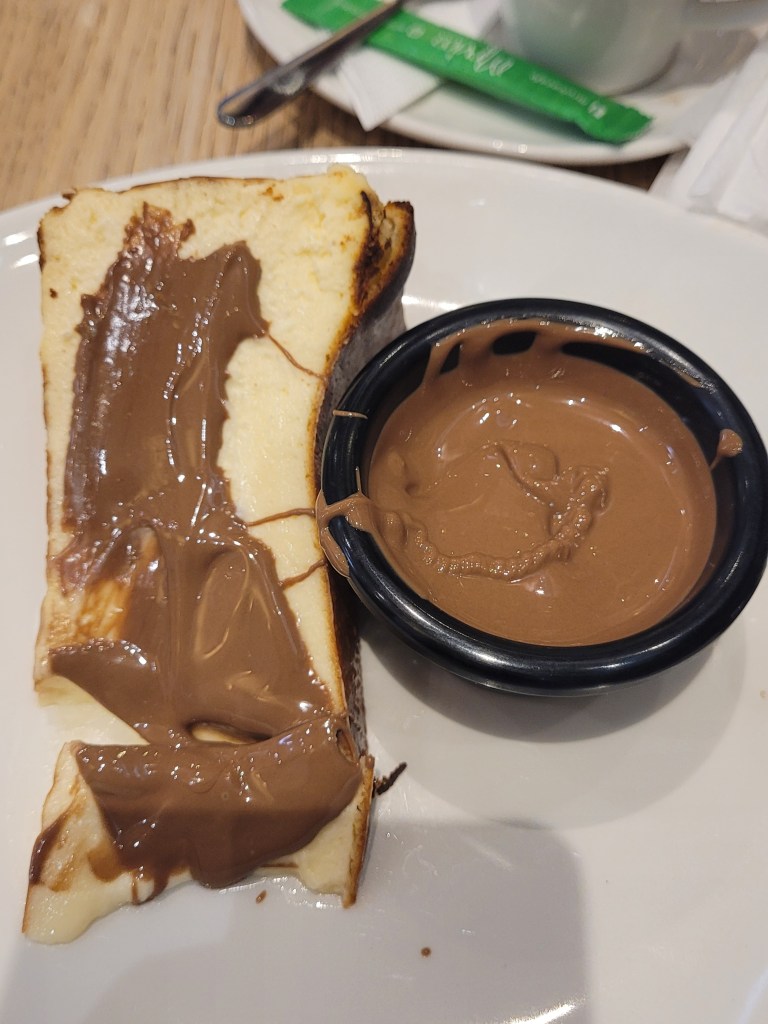
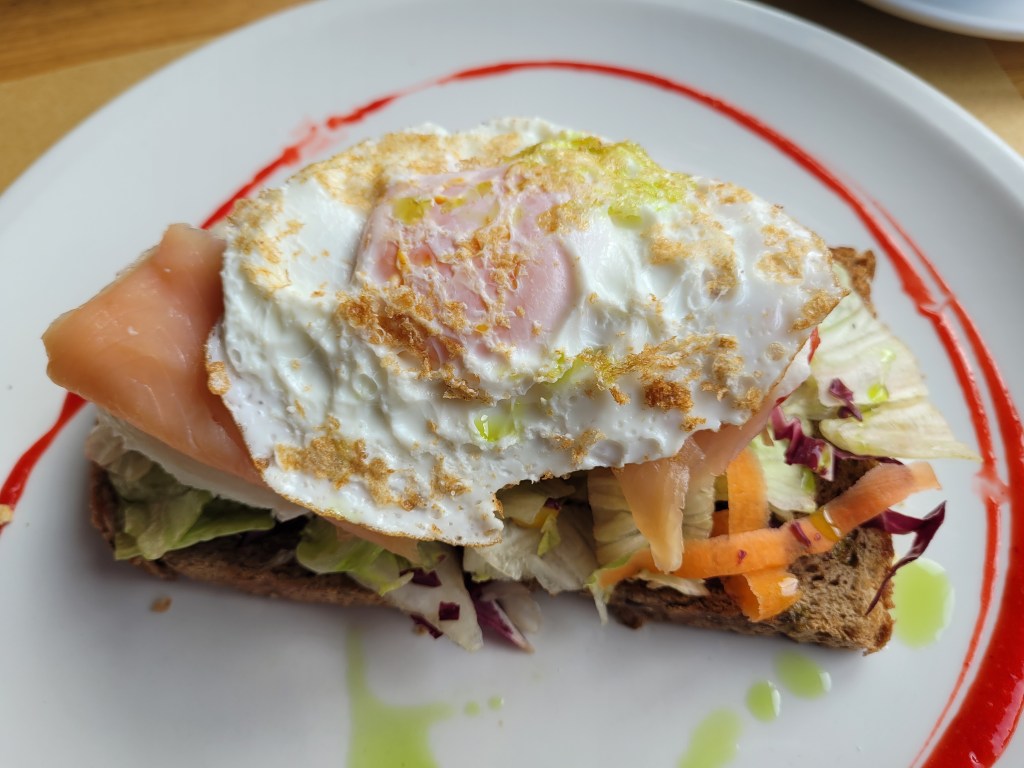
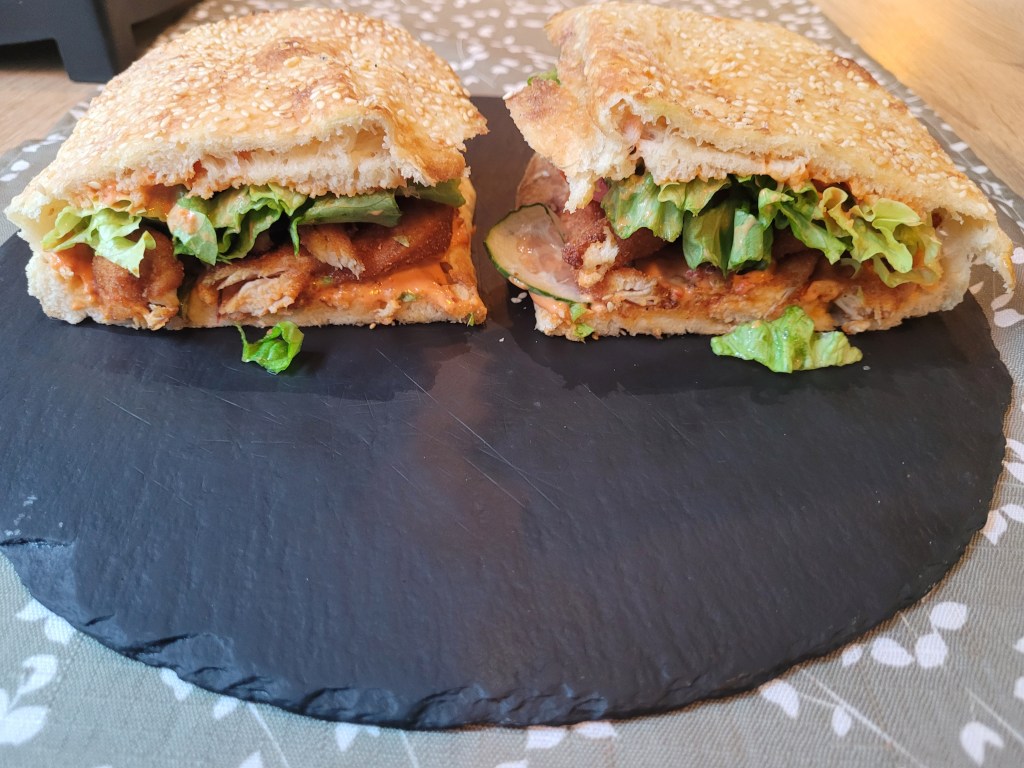
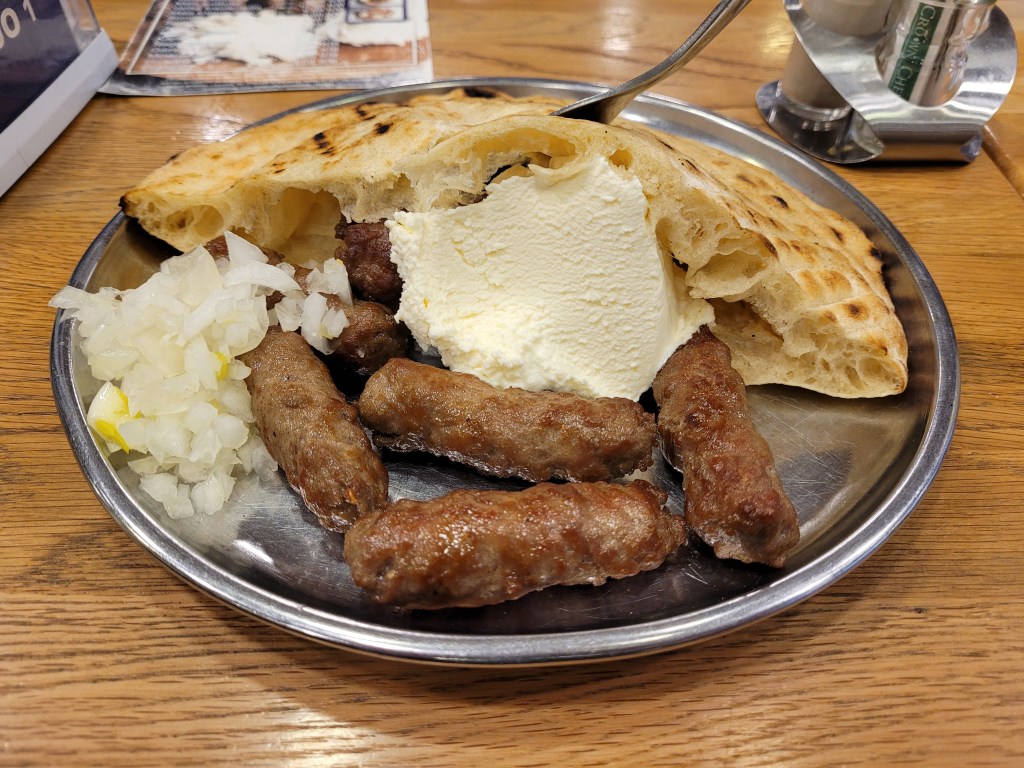
The food scene in Sarajevo is incredible, and I was looking forward to trying the real and authentic Ćevapi there. on my first day, I wanted my first meal to be Ćevapi and I’m not going to lie, it wasn’t the best! It didn’t taste great and even some Ćevapi pieces were not warm enough, so I was disappointed. However, two days later, I went to another Ćevapi place and had a very tasty Ćevapi at Ćevabdžinica Željo in the old city, and it was a great experience. Even the service was great. As for Burek, the best Burek I had was at Pita Ispod Sača. I had three small pieces: cheese, cheese with spinach, and meat. The taste was spectacular, and the woman working there was very friendly. I was drinking Bosnian coffee in Sarajevo at least twice a day; I got addicted to it. They serve it with a piece of lokum and water, and it costs around 2 to 3 Bosnian Marks only (1.12 to 1.6 USD). However, coffee shops there are usually packed with smokers, so if you’re sensitive to the smell, it might be a good idea to visit Sarajevo in the summer. That way, you can enjoy your coffee outside, hopefully away from the cigarette smoke 🙂




Sarajevo’s War Legacy
The war legacy in Sarajevo is visible in the bullet holes that scar many buildings, the large number of graveyards, and the memorials throghout the city. This legacy is still haunting the place and it’s still clearly visible even though many people I met there don’t prefer to talk about it because they decided to move on with their lives. These bullet holes and graveyards are kind of silent witnesses of the suffering people went through during the siege of Sarajevo between 1992 and 1995. The mortal shells could also be found in certain areas, highlighting the devastating impact of the war. These physical reminders of the past are still haunting but they’re also symbols of resilience and fighting spirit of the people of Sarajevo. I felt some sarrow in the air. By the way, many of the war criminals were arrested and conviceted by the International Court of Justice and they’re now serving their sentences, which brings some justice to the people who suffered because of their barbaric actions.
On my last day in Sarajevo, I decided to visit the “Tunnel of Hope” museum, constructed in 1993 to connect the besieged city with Bosnian-held territory across Sarajevo airport, which was under United Nations control. The museum was a bit outside the city and there wasn’t much to see apart from certain sections of the tunnel. Getting there proved to be a bit lengthy and challenging; I took a tram to the last stop “Dobrinja” and then a taxi to the museum. They didn’t accept card payments for ticket sales. Honestly, I’m not sure if it was a wise decision to go there. Perhaps I should have chosen another place, and I will discuss this further in the summary section of this blog.



Solidarity with Palestine
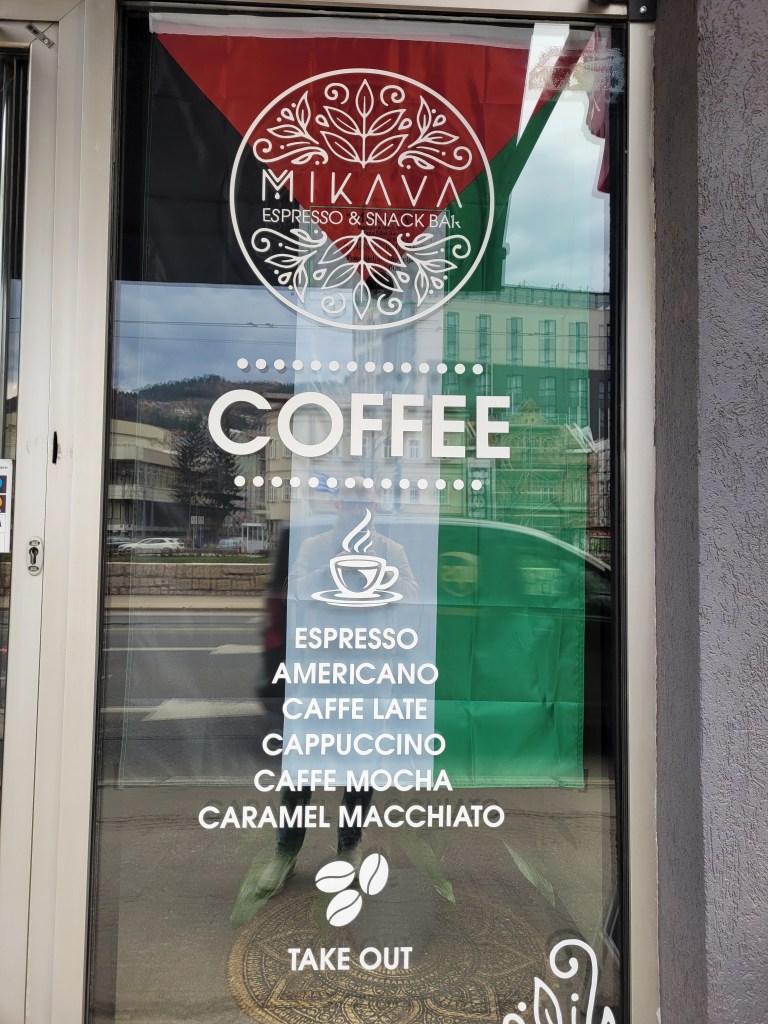
It was pleasant and comforting to see Palestinian flags everywhere in Sarajevo. It’s beautiful to witness solidarity with a side that has endured occupation, aggression, and discrimination for decades. It was great to see that the people there have the common sense to stand for a just cause. Honestly, I would prefer to be in an environment that aligns with truth and supports the oppressed, rather than being somewhere where waving the Palestinian flag or wearing the Keffiyeh can lead to arrest or job loss. Sadly, these atrocities against freedom of speech are happening today in countries that, for so many years, considered themselves free and promoters of freedom values. It seems like the freedom values they endorse must align with their narratives; otherwise, if you don’t follow that, you may face so many accusations. Quite ironic, isn’t it? I’m glad more people know the truth now.



Summary
I spent four days in Bosnia and Herzegovina, with three full days in Sarajevo and one day in Mostar. I’m planning to post another blog about my day in Mostar in a few days. Sarajevo is truly a unique city; it’s a meeting point of cultures, with diverse architectural styles from different eras in one place: Ottoman, Austro-Hungarian, and Brutalist communist architecture and it’s a place where people from different faiths lived side by side for centuries. The streets are beautiful, the people are kind, and the history is deep. Sarajevo isn’t a large city, despite being the country’s capital and its most populous city, with a population of about 350,000 inhabitants only. It’s a city I’ve wanted to visit for a long time, and I’m glad I finally had the opportunity to be there and see much of its beauty while learning a lot about its history.
Smoking indoor is tolarated and it’s a norm there in Sarajevo. I read somewhere that 37% of Bosnian people smoke. Everywhere you go, you will find people smoking. From bus stops to cafes, restaurants, and pubs regardless of age; teenages to senior citizens all smoking. This is something I truly didn’t like about Sarajevo.
Another thing I found inconvenient is the lack of a reliable taxi app. There’s an app called “mojTaxi,” though but it’s unreliable. Payments with credit cards aren’t accepted, and you can only use the app to call a taxi and it crashes a lot. Taxi fares aren’t as affordable as in many former USSR countries I’ve visited, such as Georgia, Kazakhstan, Uzbekistan, or even Russia. However, public transportation is available, convenient, and inexpensive, with a one-way fare costing about 1 USD, and tickets can be purchased from tram or bus drivers.



Regarding credit cards, they’re not accepted everywhere you go in Sarajevo, and cash is still heavily relied upon. You’ll need cash for various expenses, including taxis, public transportation, museum entry fees, and even in some restaurants and cafes that don’t accept credit cards. While this was somewhat inconvenient, it wasn’t a major issue during my short stay because I was there for 3 days only.
The food in Sarajevo is excellent, but don’t expect quick or professional service everywhere. Service can be slow at times, but it’s part of the local culture, so it’s best to set your expectations accordingly. I also noticed that many restaurants, especially in the old city, were crowded, making it challenging to find a table at times. I didn’t find this a problem but it’s just something that I noticed. Overall, I found the city to be affordable, although perhaps not as cheap as some places I’ve visited in Central Asia or the former USSR. Accommodations, food, transportation, and museum entry fees were all reasonably priced.
In general, I think that three days isn’t enough time to see everything Sarajevo has to offer, especially if the weather is rainy, as it was during my visit. The rain slowed down my movements, and I had to spend one afternoon in the apartment waiting for it to stop before continuing sightseeing. Unfortunately, I missed out on visiting one place I really wanted to see due to time constraints and the rainy weather: the Sarajevo viewpoint, where you can take a cable car for a panoramic view of the city and see the famous Olympic bobsled. Instead, I visited the “Tunnel of Hope” museum, which turned out to be less exciting. I think the best time to visit Sarajevo should be between April and May and late August to October. I believe that summer months could be too hot but if you’re ok with the summer heat then summer could e a good time to visit this beautiful city too. I was unlucky because of the rain but a bit lucky because it was warmer than the average tempratature of this time of the year.
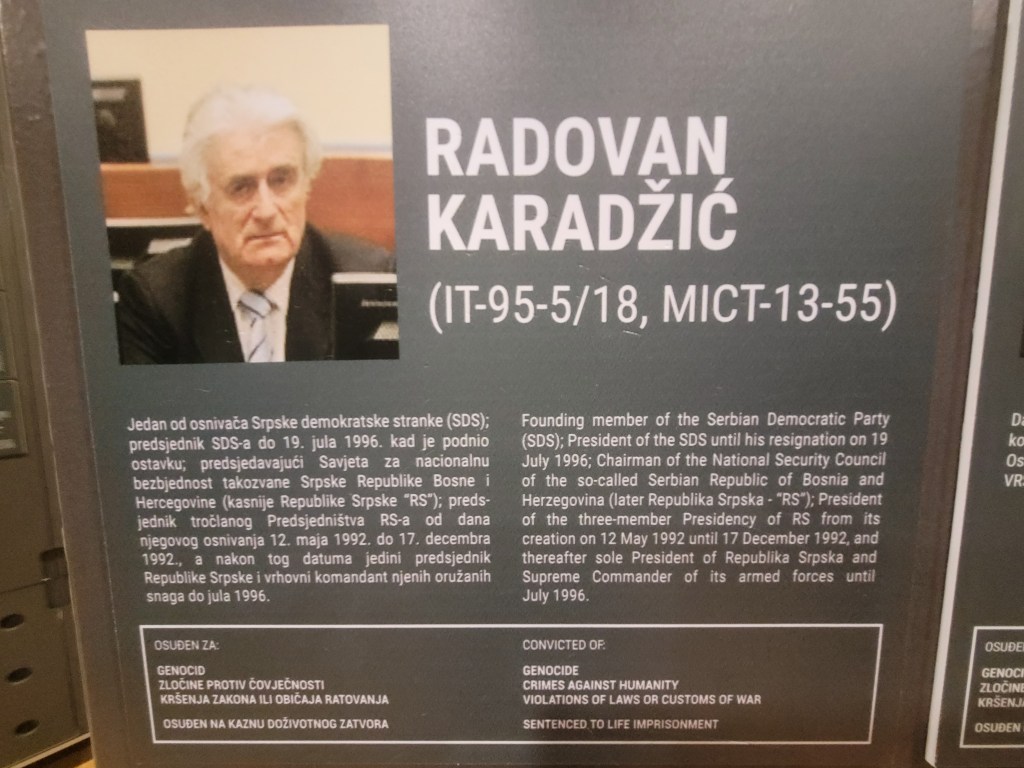
The most prominent criminals charged with committing war crimes during the Bosnian War were Slobodan Milošević, who died in prison before his trial ended, and Radovan Karadžić, Ratko Mladić, and Slobodan Praljak, all of whom were convicted. The International Criminal Tribunal for the former Yugoslavia convicted 62 Serbs, 18 Croats, 5 Bosniaks, 2 Montenegrins, 1 Macedonian and 1 Albanian.
This is all I can say about Sarajevo, the capital of Bosnia and Herzegovina. If you enjoyed this blog post, please share it. Finally, this blog is in memory of all those who lost their lives during the siege of this beautiful city.


 Travel & Share
One thought on “Sarajevo: A City Like No Other 🇧🇦”