
In the summer of 2023, I visited Kazakhstan, Tajikistan, and Uzbekistan. I started my journey in Astana, the capital of Kazakhstan, and I was visiting it for the 2nd time (click here to read my blog about my visit to Astana in June 2022). After Astana, I travelled to Karaganda by train and spent two nights there.
I’m almost certain that a majority of readers who are not from Kazakhstan, Central Asia, or any of the former Soviet Union states might not have come across the name Karaganda before. This lack of recognition about the place doesn’t surprise me at all considering that a signification percentage of the global population has limited knowledge about the Central Asia region in general.
In this blog post, I will take you through my travel experience in Karaganda, the fourth most populous city in Kazakhstan. I will also provide you with my thoughts, observations, and emotions about the city so join me!
Why Karaganda?
Karaganda is a city located in Central Kazakhstan and historically known for its industrial significance. The city was established in the early 1930s and quickly became an industrial hub, particularly in the areas of coal mining and metallurgy. Its coal reserves and strategic location contributed to its role as a major supplier of resources for the Soviet Union’s industries. Furthermore, the city has a dark history as, during the Stalin era, Karaganda and its surrounding region were home to a forced labour camp known as Gulags where political prisoners and “enemies of the state” were sent. Today, the city is a cultural and educational hub as it hosts many universities and technical colleges and has many cultural venues such as theatres, museums, and galleries that offer insights into the region’s history, art, and traditions. One of Karagnda’s nicknames is “The City of Miners”; my friend from Karaganda told me that more than half of the city population were coal miners. Visitors can even explore mining-related attractions and gain insights into the region’s historical ties to resource extraction.
The paragraph mentioned above provides compelling reasons for me to consider visiting Karaganda. However, there’s an even more significant factor that attracted me more to visiting Karaganda; the city boasts remarkable Soviet art monuments and mosaics that hold immense value for exploration and firsthand experience. As a passionate enthusiast of Soviet history (or probably anything Soviet), this factor ultimately persuaded me to explore this city with its distinct Soviet aesthetic and I’m truly delighted that I made this decision.
The train journey to Karaganda
After a pleasant 4-day stay in Astana, despite struggling with jet lag, I made my way to the train station for the journey to Karaganda. I arranged a taxi ride through the Yandex taxi app and set off for Nur-Sultan-1 train station, situated in the northern part of the city and about a 30-minute drive from my Airbnb apartment in Astana.
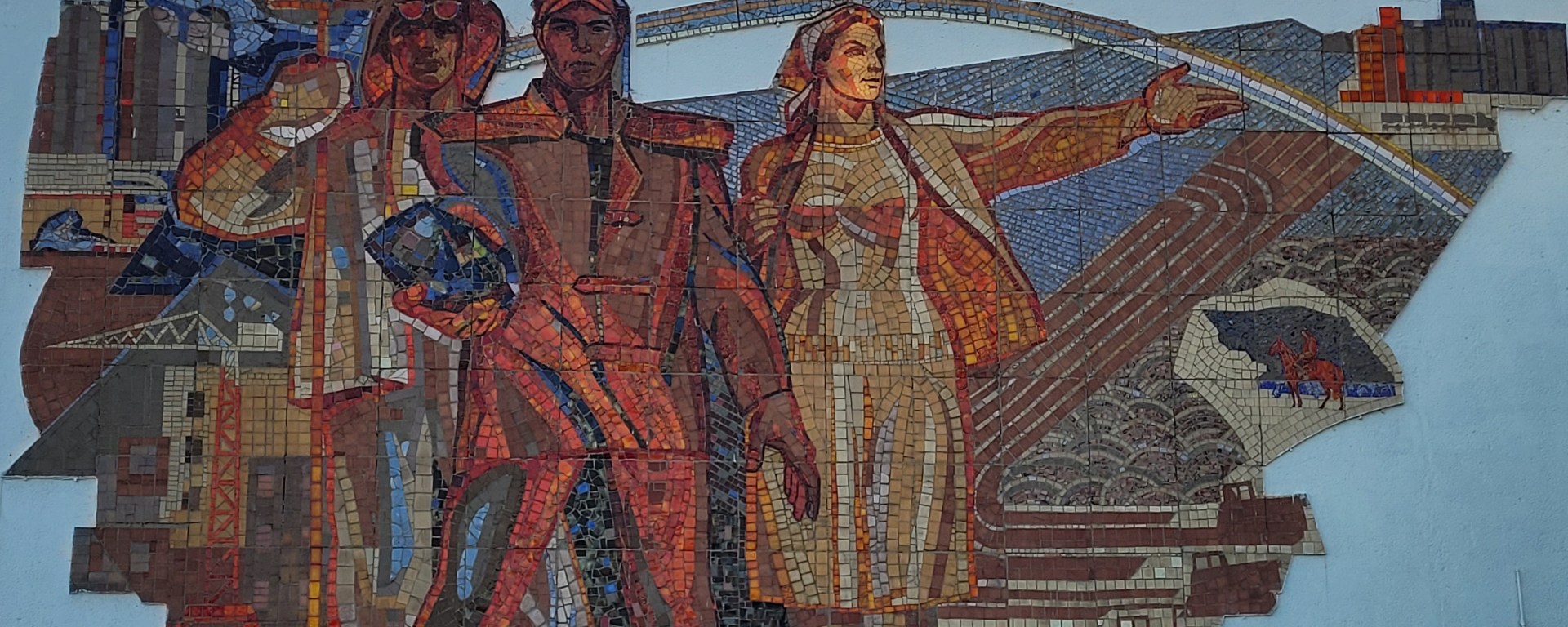
Being an enthusiast of Soviet mosaic art, I read some information about two remarkable mosaic artworks situated just outside Nur-Sultan-1 train station. Upon my arrival at the station, my immediate priority wasn’t heading to the platform to await my train. Instead, I made my way to these mosaics to admire their aesthetic charm and capture photographs of them. Seeing these mosaics brought a big smile to my face. This experience made me feel that my journey to Karaganda to enjoy its captivating Soviet history had already started, even before stepping onto the train.


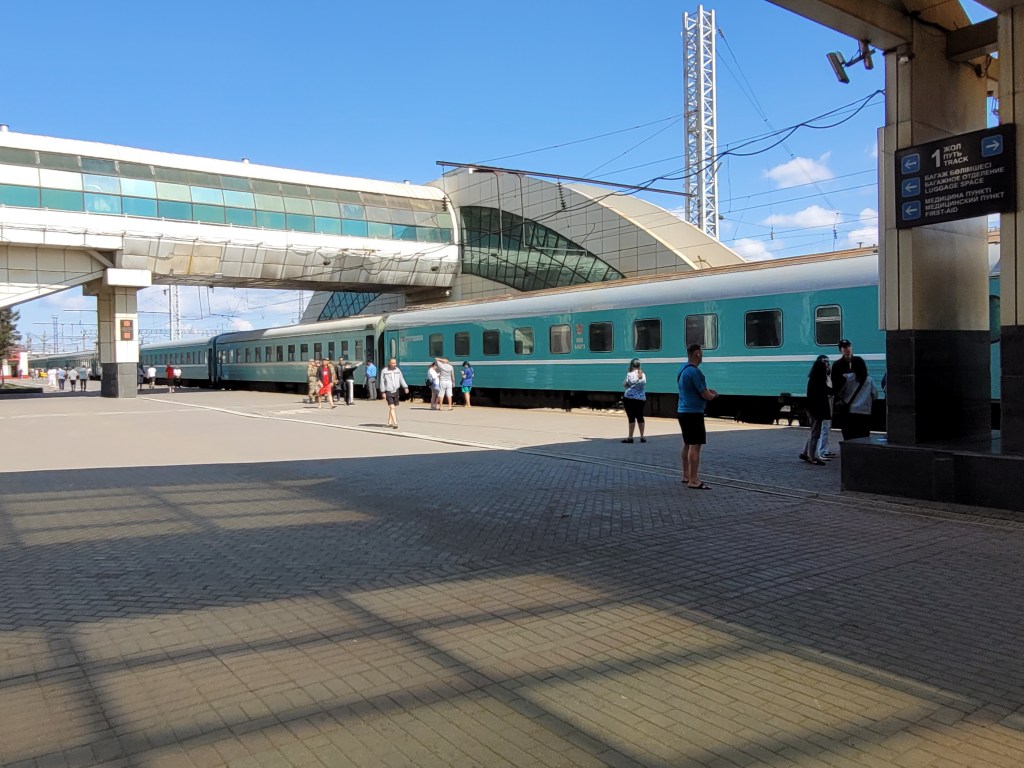
After admiring the mosaics, I ran to the platform to catch my train. With my limited and broken Russian, I had a brief conversation with the Kazakh train attendants, one male and one female, and presented my ticket and my passport for inspection. The male attendant smiled and asked me about where I’m from and what am I doing in Kazakhstan, I told him that I wasn’t originally from Canada as I was born somewhere else and with my broken Russian, I told him that Kazakhstan is the best country in the world! He laughed loudly and he joyfully high-fived me in response!
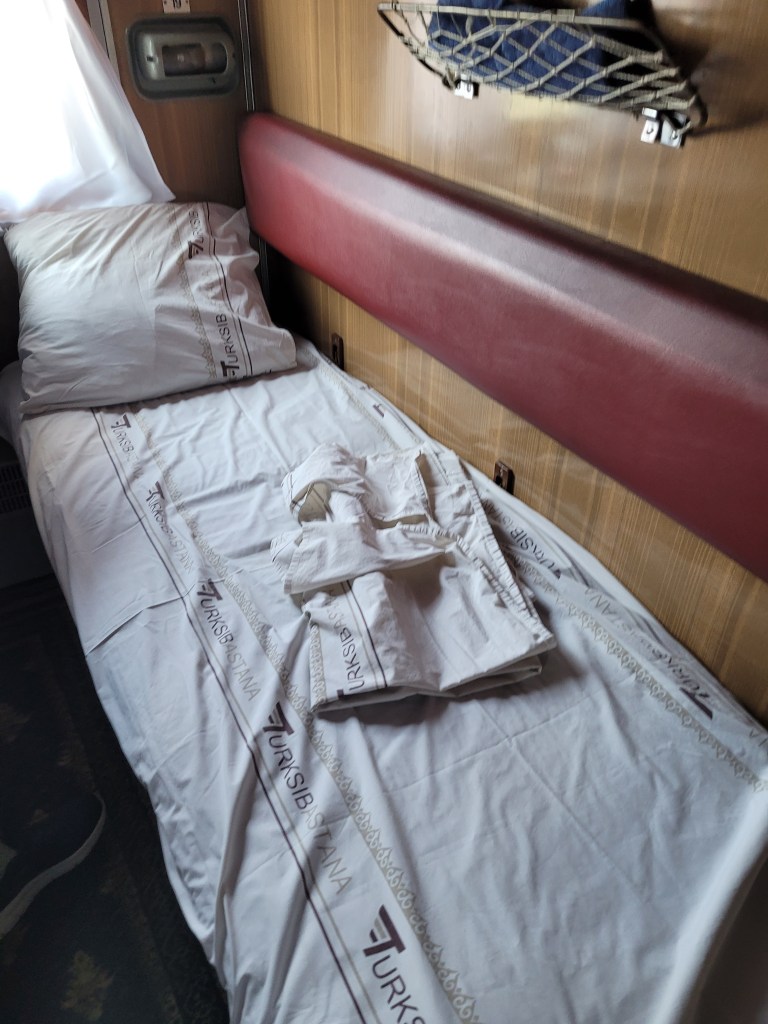
I boarded the train, and I easily found my compartment. A compartment in Soviet/Russian style trains is known as Купе (pronounced Kupe). The train that took me to Karaganda was a Soviet-era train that was built in the 1980s. Only two classes were available on this train; Platzkart (Плацкарт) and Kupe (Купе).
The journey from Astana to Karaganda took about 4 hours. It was a relatively nice ride but I must admit that it was too hot inside the compartment especially when the train makes stops. I was still able to get a few minutes of sleep despite the heat and the continuous rolling of the train. I shared the compartment with 2 Kazakh women who had some nice conversations with me (despite my terrible Russian language skills) and they even helped me in preparing my bed for sleeping. It’s clear that they’re train experts.

Arrival in Karaganda
After a journey of approximately 4 hours on a Soviet-era train through the Kazakh Steppe, I reached Karaganda train station. I booked a taxi using the Yandex app and went straight to my Airbnb apartment. After a speedy shower to freshen up, I prepared myself to meet up with my dear friend from Karaganda who guided me around the city, showing me its highlights like an expert tour guide. I’m confident that without my friend’s company, I would have missed out on experiencing much of what I did.
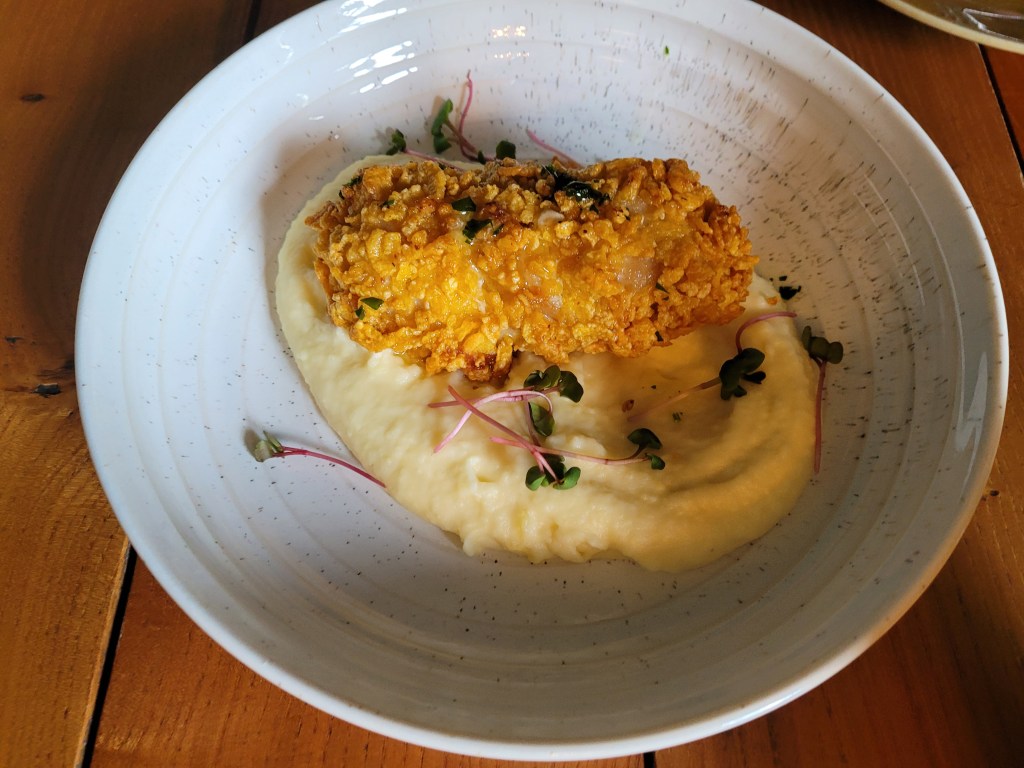
We went to a restaurant called Bratya Mushkiny, where we engaged in delightful conversations over a tasty and fancy-looking Chicken Kiev dish. An amusing incident occurred when the power suddenly went out while we were waiting for the food, but fortunately, electricity was restored a few moments later so the staff managed to resume the preparation of my Chicken Kiev, which, as it turned out, was incredibly delicious
After the great meal at the restaurant, we strolled through some lovely parks in the city center. I observed that the city hosts a variety of universities and colleges, each offering specialized education in different fields, which is quite impressive for a city with a population of 500,000 residents.


Monument of Gagarin
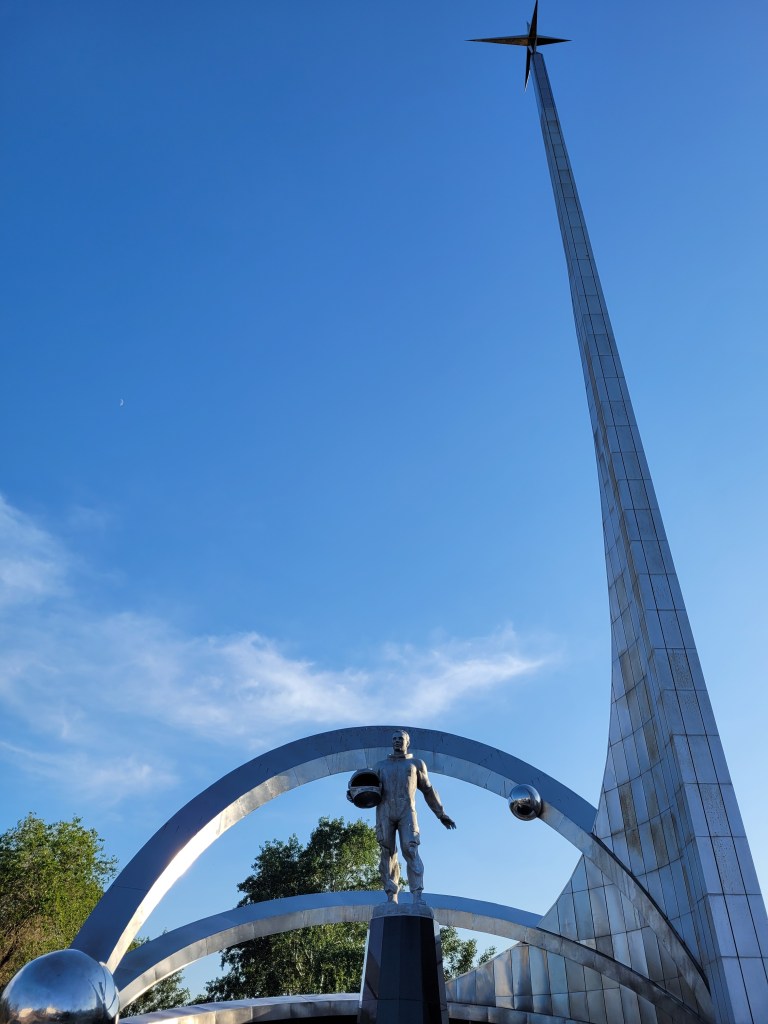
Later on, I made a stop to visit the Gagarin monument in Karaganda. It’s truly remarkable how the achievements of the Soviet Union’s space exploration continue to be celebrated across the former Soviet lands to this day. If we were to survey former Soviet citizens about the most iconic figure from that era, I’m confident that the majority would choose “Gagarin”. The monument is truly spectacular and a joy to behold. After admiring it for a few minutes, I took advantage of the opportunity of being there next to it and I asked my friend to take a photo of me standing beside it.

Karaganda is a paradise of Soviet mosaics
Later on, it was time to enjoy a very special moment, which is one of the primary reasons why I was visiting Karaganda, which is its reputation as a heaven of Soviet mosaics. These beautiful mosaics are meticulously restored and impeccably maintained, they’re located just outside the central park of Karaganda. The mosaics pay tribute to the city’s miners. Seeing and admiring these mosaics in person sent shivers down my spine and filled me with delight. Oh Karaganda, you’re such a beautiful Soviet paradise!


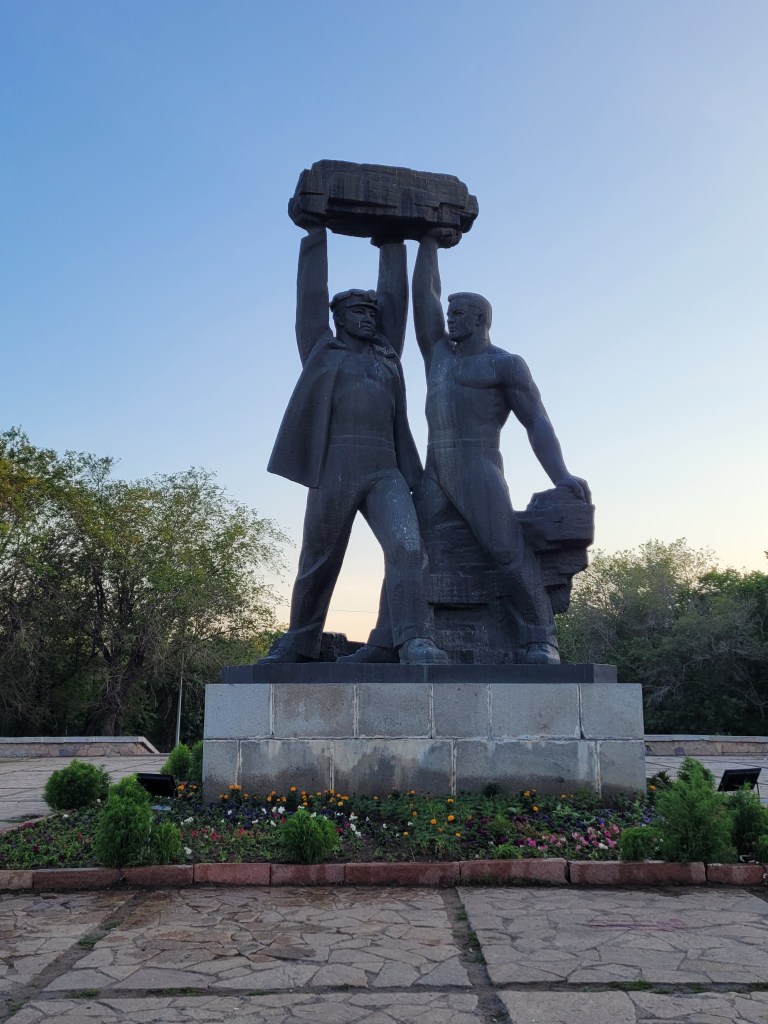
Right next to these mosaics, there was an iconic landmark of the city, which is, the miner’s glory monument. The monument which was erected in 1974, in honour of 2 million tons of coal production in Karaganda, became later the symbol of the city.
Karaganda Central Park
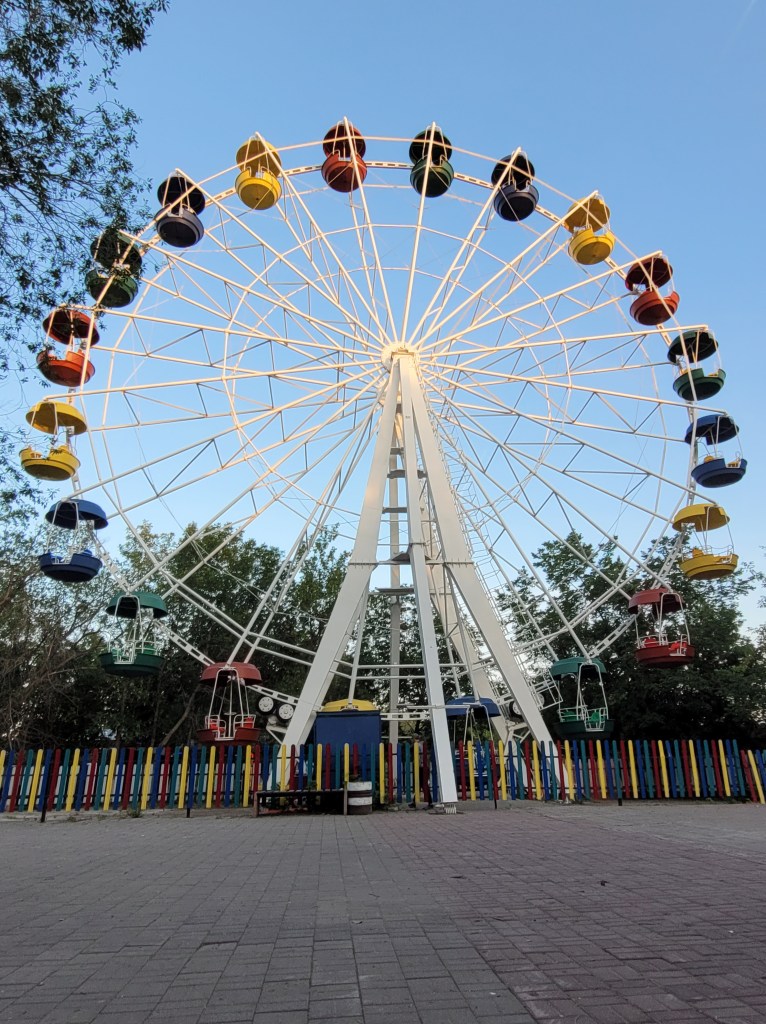
Many city residents, my friend included, refer to this park as their favourite spot spot within the city. Following a stroll in this charming park, I could understand why they said so. The park exudes a refined ambiance. Furthermore, there are various nostalgic rides that brought some memories from my childhood. As it was a sunny Sunday afternoon, the park was bustling with activity; with families and friends enjoying their time purely. Observing the scenes of people enjoying their moments brought me profound joy. This was undoubtedly a captivating walk that will forever remain etched in my memory.


I observed that Karaganda is a diverse and multi-ethnic city, with Kazakhs being the majority (around 52%), and a notable ethnic Russian minority comprising around 35% of the population. Additionally, there are approximately 3% Ukrainians, 2% Germans, and 2% Tatars.
Karaganda Regional Museum
The original plan was to explore Karlag, the museum dedicated to victims of political repression, but unfortunately, it was closed on Monday. This museum is highly recommended for anyone visiting Karaganda, despite being situated about 40 Kilometers outside the city. I won’t write about it further since I didn’t get a chance to visit it, but you can find more information about it in the following link: here.
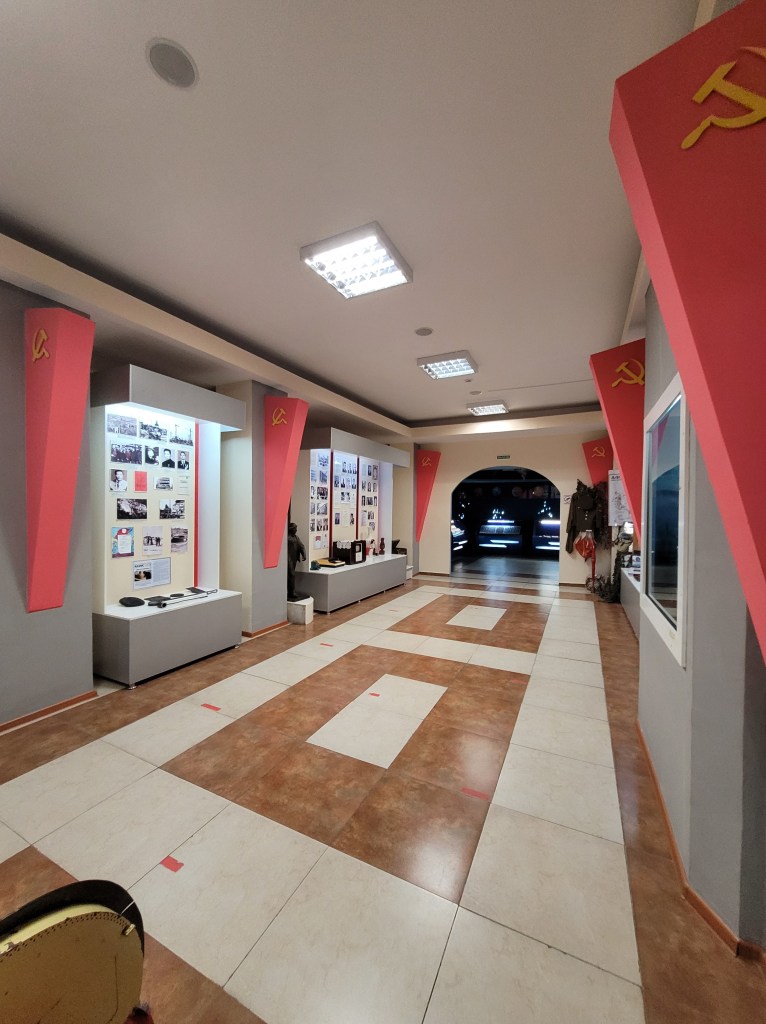
Consequently, I opted to visit the Karaganda Regional Museum for local history and ethnography which is located in the city center. The museum is very old; it was opened in 1932 so it’s about 90 years old. The museum provides insights into Kazakhstan’s history during the 19th and 20th centuries and it covers economic, social, and political aspects. I dedicated about an hour to exploring the museum and I think it was more than enough to see and explore whatever I wanted to see. My favourite section was the Soviet space explorations section and I also had the pleasure of seeing another Misha bear, which is one of my favourite Soviet-era icons. Misha was the official mascot of the 1980 Summer Olympics, which were held in Moscow, and it quickly became a beloved symbol associated with the games and it’s still celebrated in the entire former Soviet Union republics to this day.



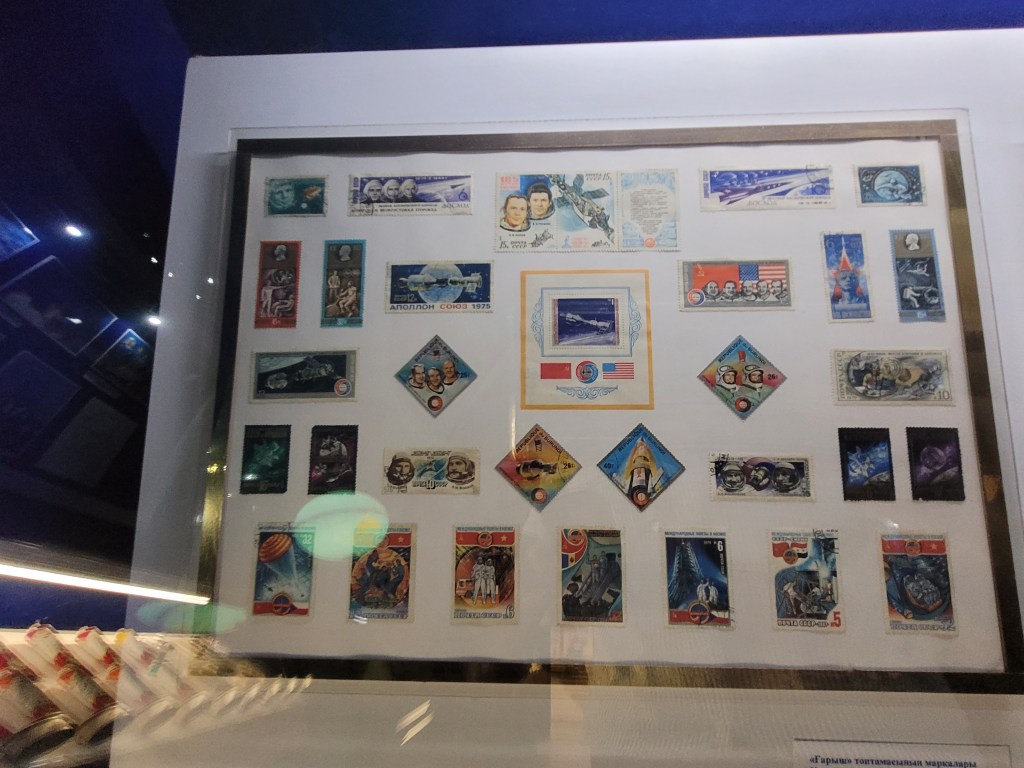
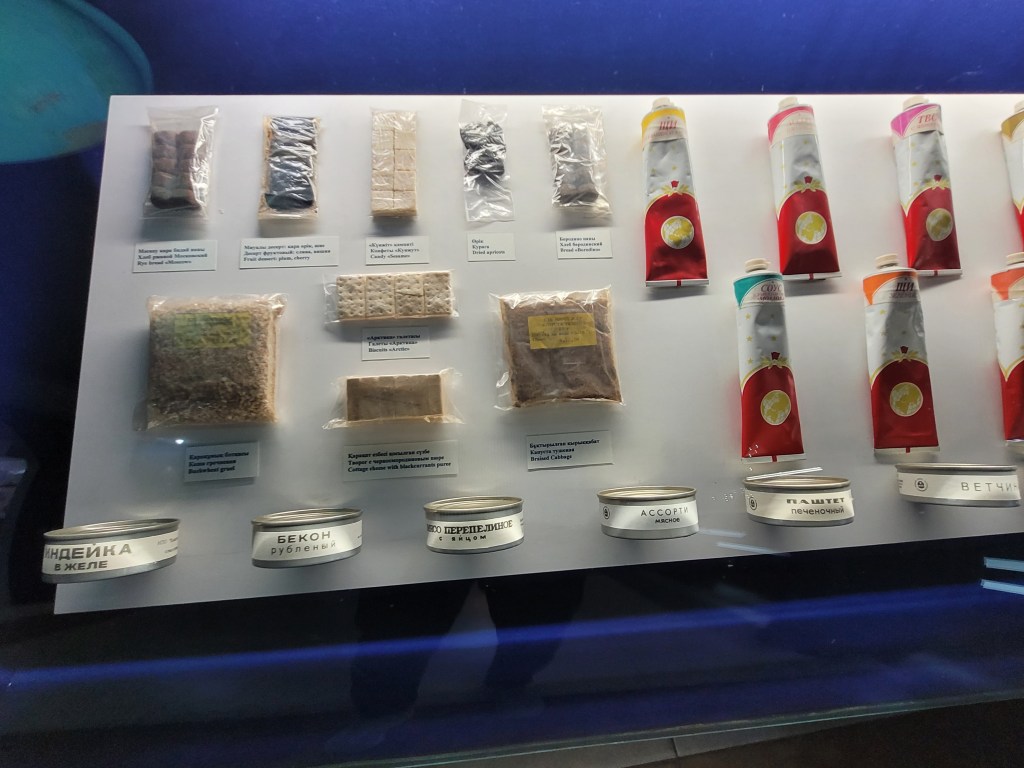

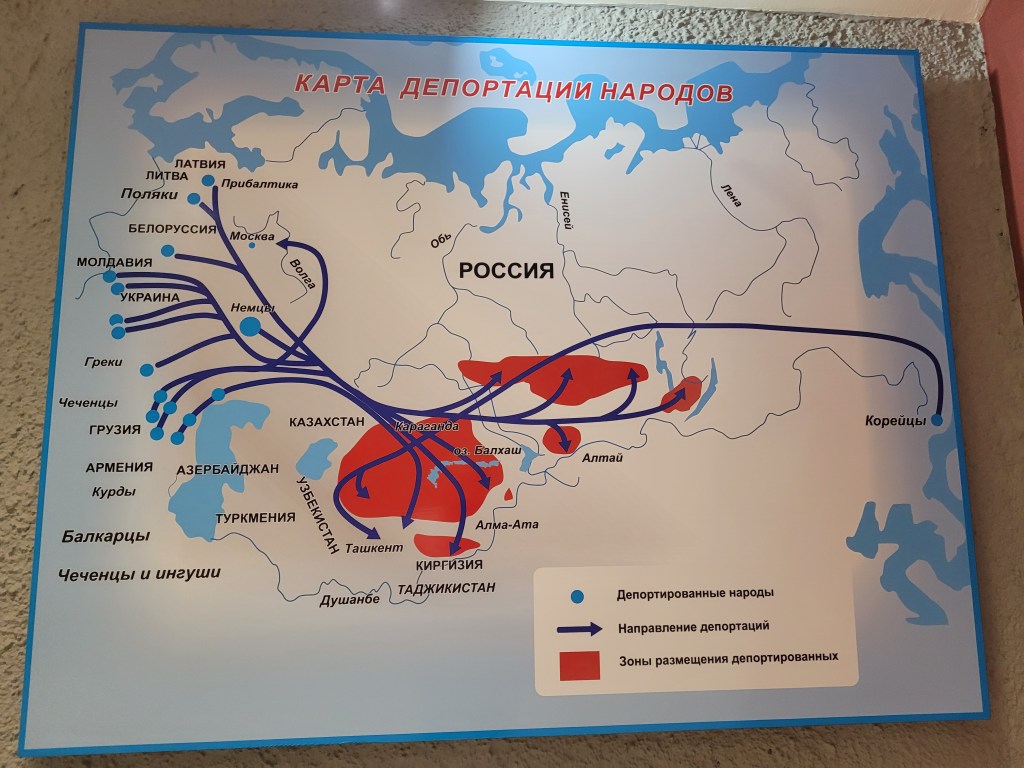
Memorial of Eternal Flame
I continued to encounter Soviet monuments and legacies in Karaganda. I made a brief stop to check out the Eternal Flame, a World War II memorial (referred to as the Great Patriotic War in the former Soviet Union States). I noticed fresh flowers at the memorial which indicates that the memory of the war is still very much alive in these countries to this day.

Gagarin Mosaic
Another breathtaking moment occurred during my short stay in this great city when I was standing in front of this great mosaic of Yuri Gagarin. To be honest, choosing the most beautiful mosaic in this city is such a difficult task, given their artistic value and beautiful restoration. However, if I were pressed to make a choice, I might lean a bit towards this Gagarin mosaic. Staring at this splendid artwork has the power to take you back in time to the era of the Soviet Union’s glory when it sent the first human into space in such a remarkable achievement. The sensation I had was truly indescribable!
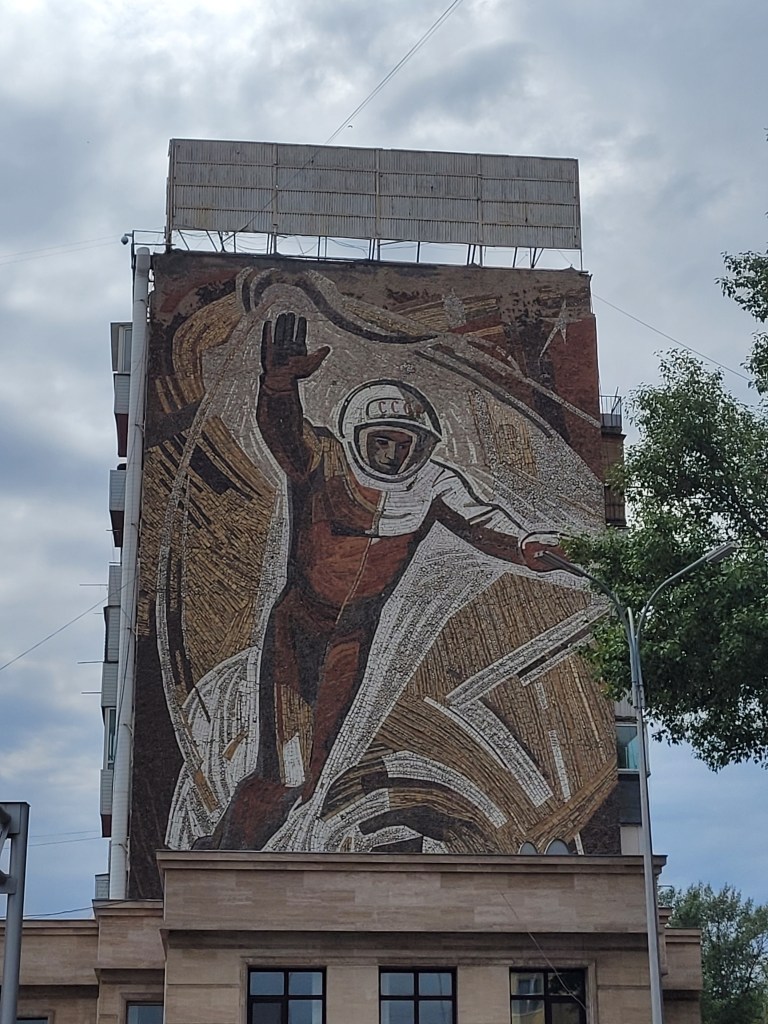
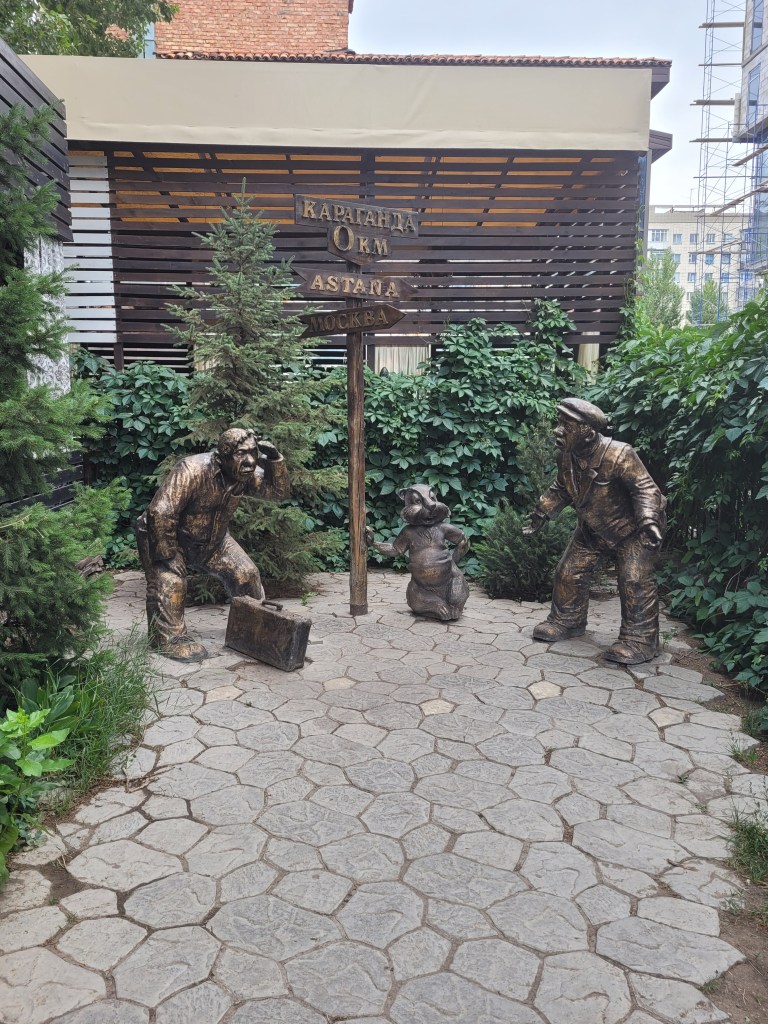
Где-где? В Караганде! Gde-gde? V Karagande!
Gde-Gde? V Karagande! is a rhythmic phrase in the Russian language that translates to “Where-where? In Karaganda! It’s a catchphrase to refer to something situated in a remote and isolated location, far away from civilization or any significant surroundings. The monument won a certificate from the Guinness World Records for being the world’s first monument to a catchphrase! It’s a funny phrase and the monument is even funnier, It’s located on the territory of one of the city’s restaurants that is called Traktir Tri Medvedya. Note that you don’t need to eat at the restaurant to visit the monument.
Food in Karaganda
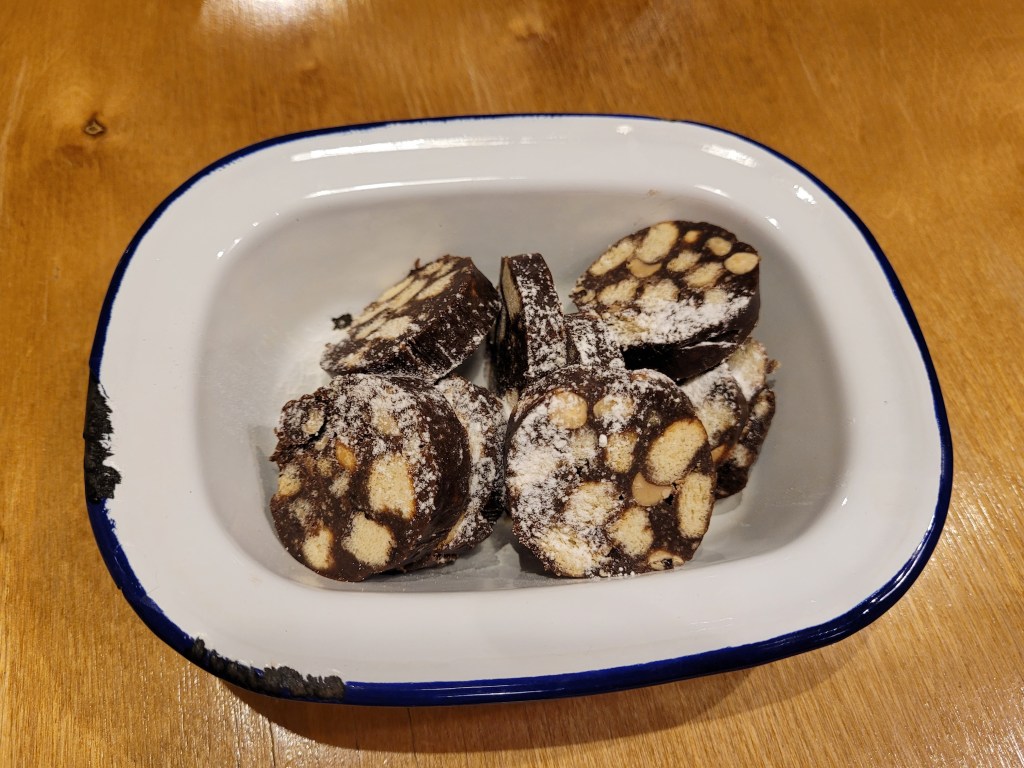
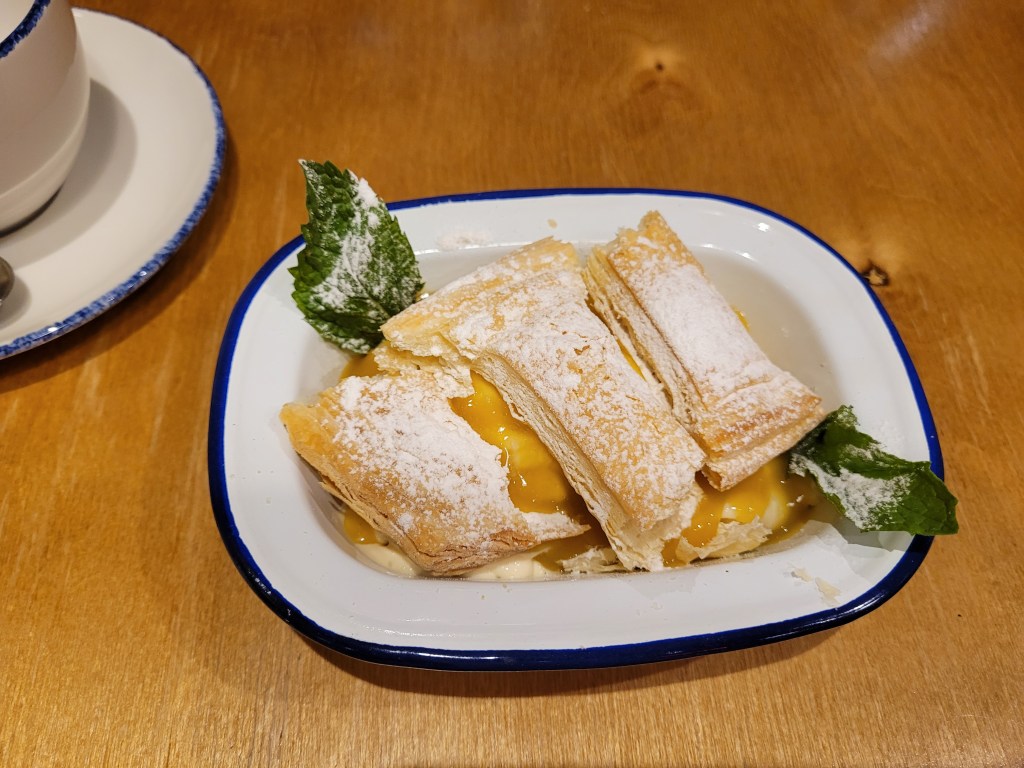
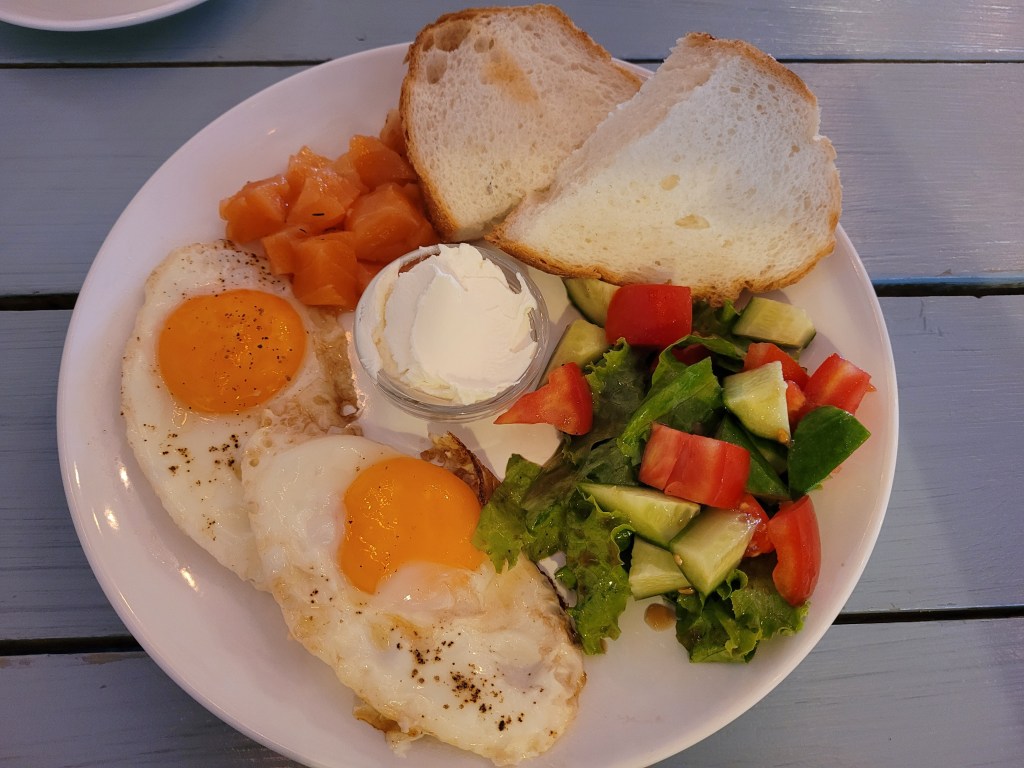
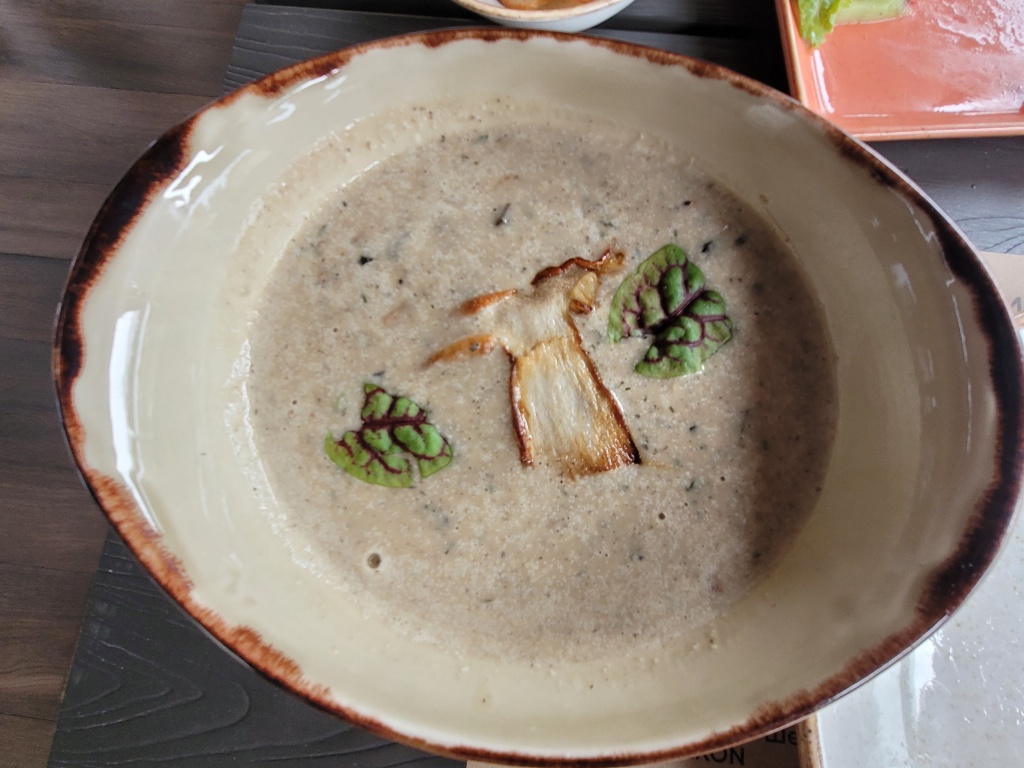
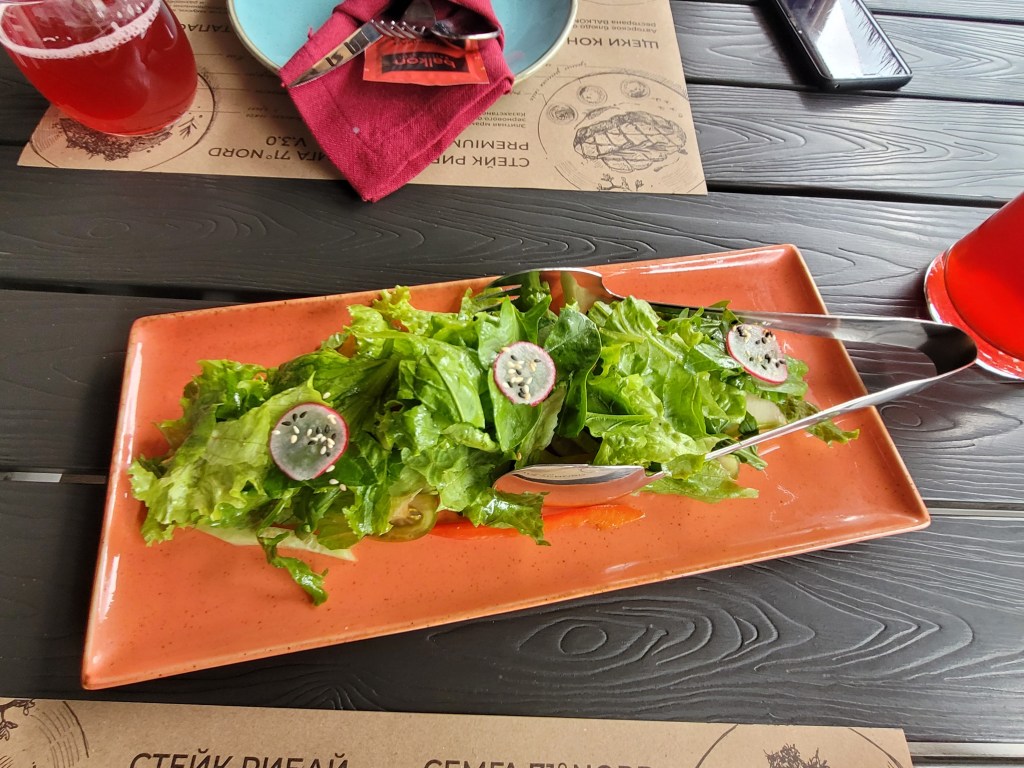
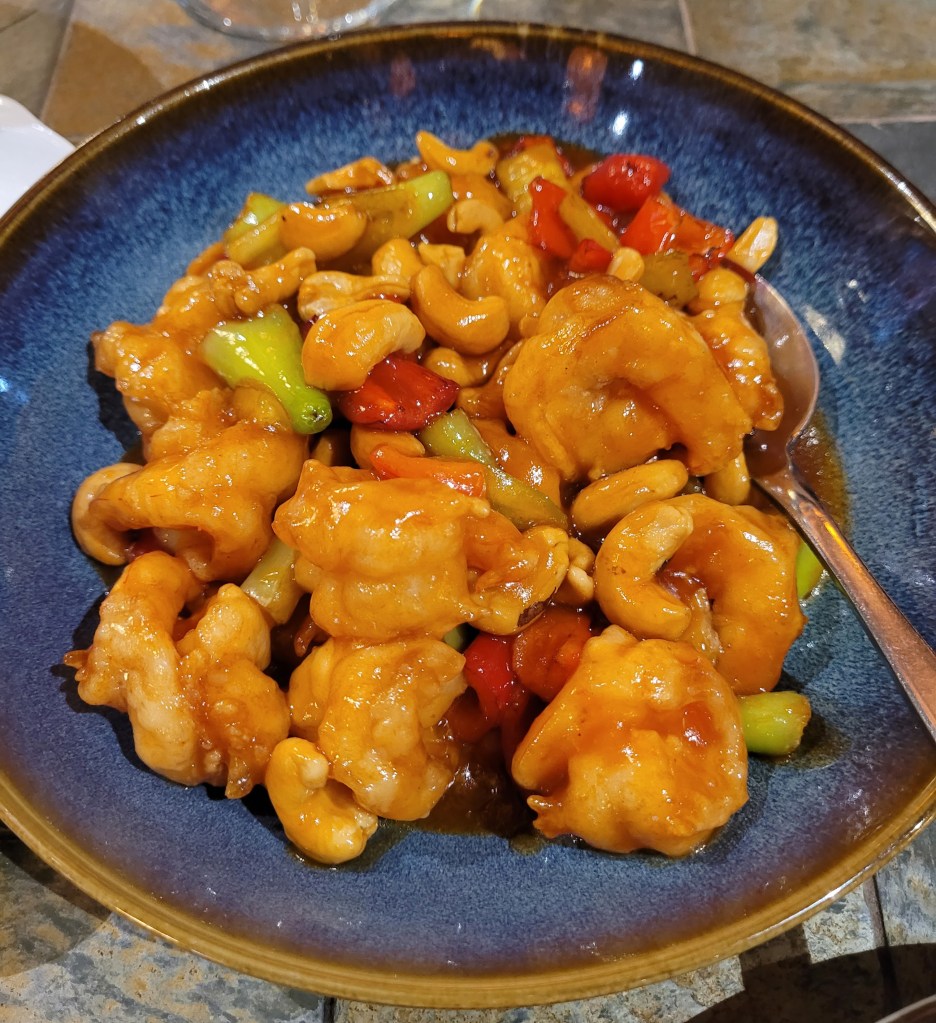
As you all know, no trip to a city or country is complete without trying the local cuisine. During my 1.5-day stay in Karaganda, I explored multiple restaurants and cafes. While everything I sampled was good, some dishes were not special at all. The standout dining experience in terms of food quality, was at the restaurant inside the Senator Hotel. Their mushroom soup was truly exceptional. I also visited Turandot Chinese restaurant (which was average), Barista coffee bar for breakfast, and the Glavkul’t Soviet-style cafe. Additonally, we dined at the Brat’ya Mushkiny restaurant right after my arrival in the city.
Summary
I understand that Karaganda may not be a prominent name in global tourism, nor is it among the top cities to visit in Kazakhstan. However, the city’s distinctly Soviet appearance, along with its well-preserved monuments and mosaics, held a unique appeal for me as a Soviet history enthusiast.
I was disappointed that I couldn’t visit the Karlag Museum of political repression victims. I arrived in Karaganda on a Sunday afternoon and left on a Tuesday morning. Monday was the only available day for me to visit the museum, but unfortunately, it was closed.
Despite my short stay, with the help of my friend, we managed to explore many places in the city that I haven’t detailed in this blog post, including a visit to a Catholic church and the city’s water reservoir, which resembles a beach. Once again, I’m grateful to my friend for being an excellent guide.
The weather was perfect – sunny on the first day and a bit cloudy on the second, with a pleasant temperature that made walking, hiking, and exploring enjoyable. I’m not a fan of hot weather, especially when I need to be active, so this was ideal. Karaganda’s weather can be extreme, particularly during the winter. Temperatures as low as -30 degrees Celsius are not uncommon, so visiting during this season might not be the most favourable idea. In my opinion, the best times to explore the city would be between May and June, or from the end of August to the beginning of October.
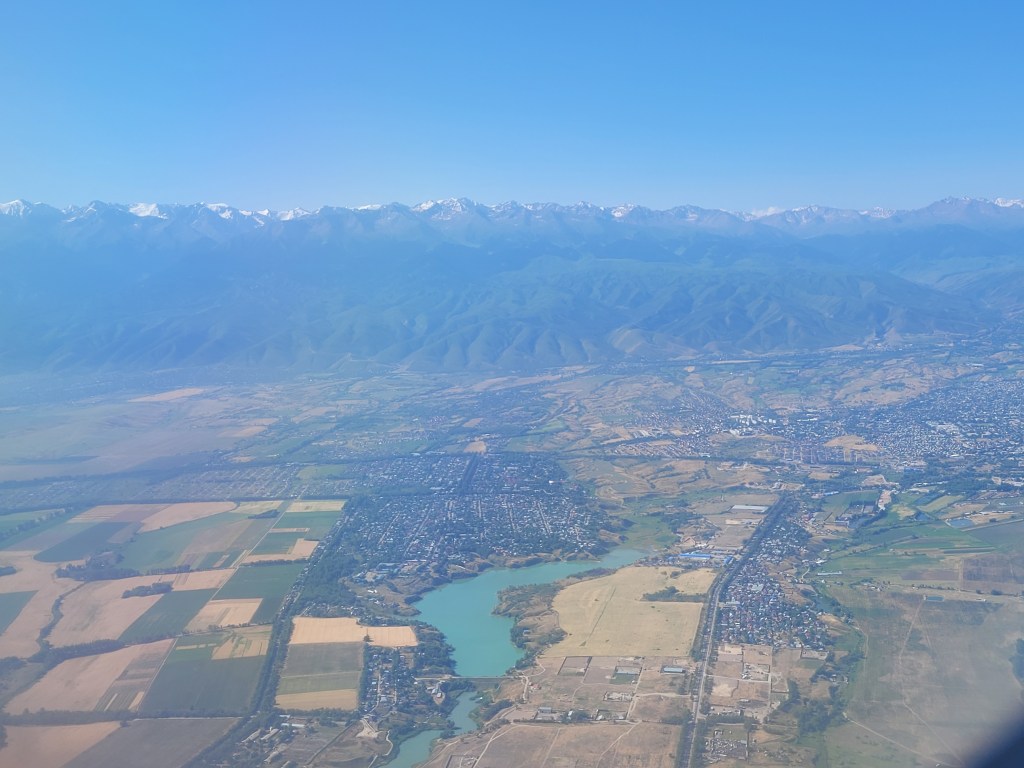
The next morning, I headed to the airport to catch my flight to Almaty. I flew with FlyArystan, a low-cost airline based in Kazakhstan. The flight was perfect and departed exactly on time. As it’s a low-cost carrier, I had to pay for food and drinks, which wasn’t a problem at all. Karaganda airport looked so retro and Soviet, which was perfect for me.
That’s all I can say about Karaganda for now. If you enjoyed this blog, please feel free to share it.



 Travel & Share
Incredible post! Thank you! Do you have the exact location of the Gagarin Mosaic?
LikeLiked by 1 person
I’m so happy to hear that you enjoyed reading the post. The huge and beautiful Mosaic of Yuri Gagarin is at the intersection of Gogol Street and Nurken Abdirov Street 🙂
LikeLike
Really nice post!! I love soviet union history too and I’m travelling there in few months, and Uzbekistán, and I’ve been in Azerbajan few months ago. Thanks for your post again! 😉
I recently started a youtube channel after many years traveling. English subtitles, I talk a lot about USSR too!!
Cheers
http://www.youtube.com/@repisoelmapa
LikeLiked by 1 person
Thanks for the nice words. It’s great that you finally decided to start a YouTube channel. I probably have to do the same (many people encouraged me to do so) but I feel that I’m a bit shy in front of the camera. I checked your first video in your channel and its about Moldova. I’m thinking to go there soon! I want to visit Transnistria too!
LikeLike
Do it!!! First you will be shy, but step by step!! 😉 I’ll post videos from Transnistria in 2 weeks 😛 Thanks for your posts, they’re very useful for me: CHEERS
LikeLiked by 1 person